Crossword puzzles have a wonderful habit of making people feel both highly intelligent and deeply confused within the same five-minute period.
One moment you are confidently filling in answers with dramatic speed.
The next, you are staring at a clue involving fermented tree sap and wondering whether you accidentally enrolled in a botany course.
One clue that occasionally appears in crossword puzzles is:
Asian tree whose sap is fermented to make wine
The most common answers are:
PALM
(4 letters)
and sometimes:
TODDYPALM
(9 letters)
The correct answer usually depends on the number of spaces in the crossword grid.
Simple once you know it.
Considerably less simple when your brain has decided the answer must somehow be “coconut wizardry.”
4-Letter Answer: PALM
The most common crossword solution is:
PALM
This clue refers to palm trees whose sap can be collected and fermented into alcoholic beverages commonly known as:
- palm wine
- toddy
- arrack (in some regional traditions)
Palm wine has been produced for centuries across parts of:
- Asia
- Africa
- the Pacific Islands
The sap is harvested directly from certain palm species and naturally ferments quite quickly due to wild yeast activity.
Which, if we are being honest, is both scientifically fascinating and slightly unsettling.
Nature truly seems determined to ferment absolutely everything eventually.
9-Letter Answer: TODDYPALM
In larger crossword puzzles, you may also encounter the answer:
TODDYPALM
This is simply the term “toddy palm” written without a space, as crossword grids typically remove spaces and punctuation.
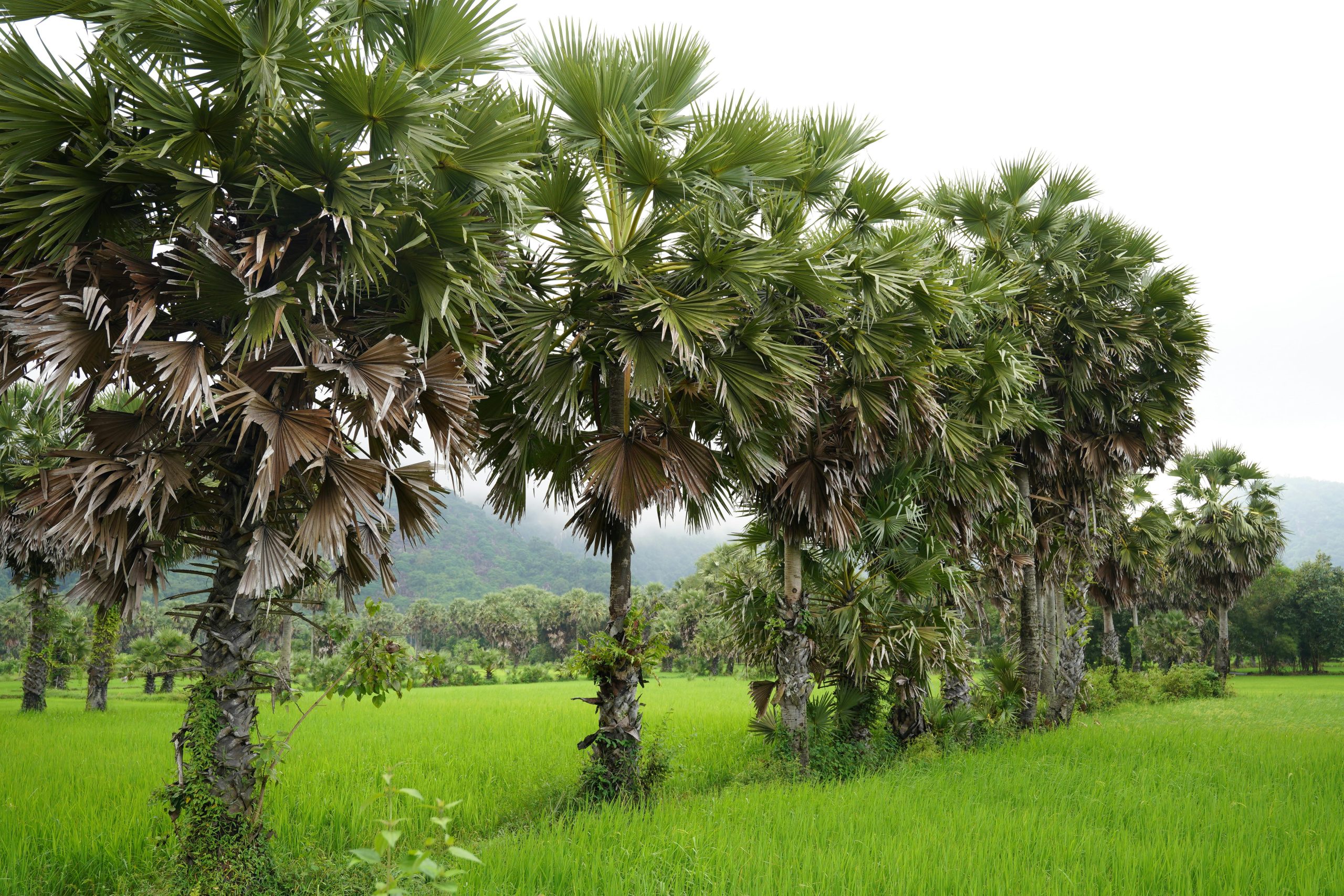
A toddy palm is a specific type of palm tree associated with producing toddy or palm wine from fermented sap.
So if your crossword clue asks:
Asian tree whose sap is fermented to make wine
and you need:
- 4 letters → PALM
- 9 letters → TODDYPALM
you are very likely on the right track.
Crossword solving occasionally feels less like vocabulary practice and more like participating in an oddly educational scavenger hunt.
What Exactly Is Palm Wine?
Palm wine is an alcoholic drink made from the naturally fermenting sap of various palm trees.
Fresh palm wine is often:
- sweet
- cloudy
- lightly fizzy
- relatively low in alcohol
As fermentation continues, it gradually becomes:
- more sour
- stronger
- funkier in flavor
Some people compare it loosely to:
- cider
- kombucha
- sour beer
- very young wine
Others simply describe it as “an acquired taste,” which in food and beverage language often means:
“You may need a moment to process this.”
How Is Palm Wine Made?
The process is surprisingly ancient and surprisingly simple.
Harvesters tap the tree by carefully cutting into flowering stems or trunks, allowing sap to drip into containers.
Once collected, natural yeasts begin fermenting the sugars almost immediately.
In warm climates, fermentation can happen very quickly — sometimes within just a few hours.
Which means palm wine has one of the shortest journeys imaginable from:
“fresh tree sap”
to
“technically alcoholic.”
Home winemakers reading this are usually reacting in one of two ways:
- fascination
or - complete horror at the lack of fermentation control
Sometimes both simultaneously.
Different Palm Trees Can Be Used
Depending on the region, palm wine may come from:
- coconut palms
- date palms
- palmyra palms
- nipa palms
- oil palms
Each type produces sap with slightly different:
- sugar levels
- flavors
- fermentation characteristics
This is one reason palm wine traditions vary so much around the world.
Palm Wine Has Deep Cultural Roots
Palm wine is far more than a curious crossword answer.
It has played important roles in many cultures for centuries and is commonly associated with:
- celebrations
- weddings
- ceremonies
- hospitality
- religious traditions
- community gatherings
In some regions, palm wine tapping remains an important local profession passed through generations.
And honestly, anyone climbing tall palm trees while carrying containers deserves a certain level of respect immediately.
Crossword Puzzles Love Wine Clues
Crossword creators seem unusually fond of:
- obscure beverages
- regional alcohols
- ancient drinks
- strange fruit references
- words involving fermentation
This explains why wine enthusiasts occasionally perform suspiciously well at crossword puzzles without fully understanding why.
If you enjoy puzzle-themed wine clues, you may also like our article on the sweet wine crossword, where we break down popular wine-related crossword answers by letter count.
Because apparently wine knowledge now doubles as emergency crossword survival skills.
Other Related Crossword Answers
Depending on the clue wording, you might occasionally encounter related answers such as:
- TODDY
- ARRACK
- DATE
However, for the clue:
Asian tree whose sap is fermented to make wine
the safest answers are usually:
- PALM
or - TODDYPALM
depending on the required number of letters.
Why Wine Words Work So Well in Crosswords
Wine terminology appears constantly in crossword puzzles because it provides:
- short useful words
- unusual spellings
- regional names
- vowel-heavy combinations
Puzzle makers absolutely adore words like:
- asti
- brut
- cava
- rioja
- sec
Mainly because they fit neatly into grids while the rest of us stare at the puzzle wondering why we suddenly need detailed knowledge of 14th-century beverages.
Final Thoughts
The crossword clue:
Asian tree whose sap is fermented to make wine
most commonly leads to:
- PALM (4 letters)
or - TODDYPALM (9 letters)
Behind these small crossword answers lies a surprisingly rich world of:
- traditional fermentation
- cultural history
- tropical agriculture
- ancient alcoholic beverages
Which is honestly one of the nicest things about crossword puzzles.
Sometimes a tiny clue unexpectedly opens the door to an entirely different corner of the world.
And occasionally, it also leaves you craving a glass of wine while aggressively searching for a pencil that somehow vanished three clues ago.