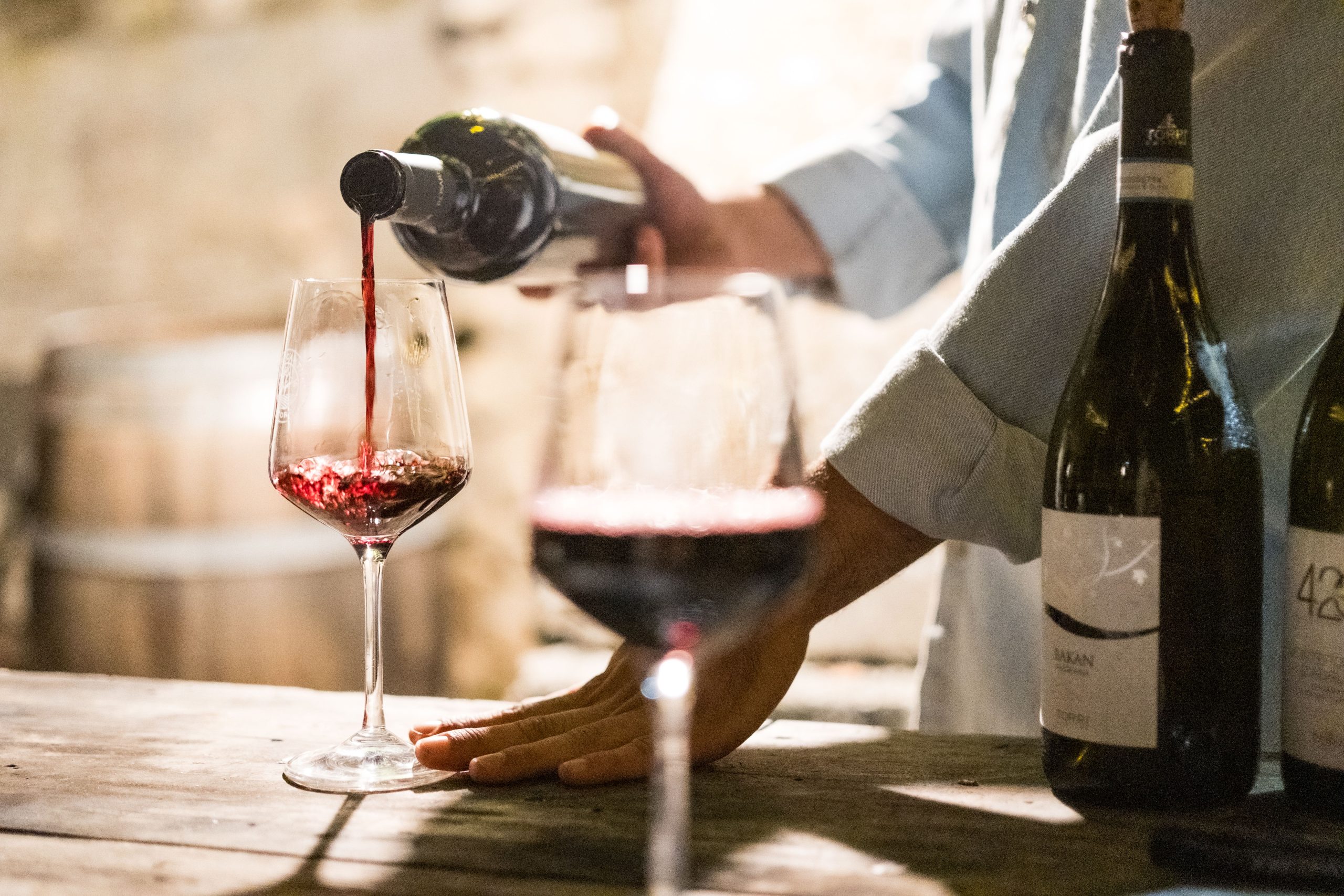
You are browsing Australian wines online when one bottle proudly announces:
95 Halliday points.
Excellent.
Presumably.
But if you live outside Australia — or have simply managed to enjoy wine without first studying the international hierarchy of wine critics — you might reasonably have two questions:
Who is Halliday? And what happened to the other five points?
The short answer is that Halliday Wine Companion is one of the most important guides to Australian wine, and a score of 95 is very good indeed.
The longer answer is more interesting, because Halliday can be useful for much more than finding bottles with impressively large numbers beside them.
First things first: What is Halliday Wine Companion?
Halliday Wine Companion grew from the work of James Halliday, one of the most influential figures in Australian wine.
The original Australian Wine Companion appeared in 1986, and what began as a printed guide to Australian wines and wineries developed into a much larger wine resource. Today, Halliday Wine Companion includes the annual guide, an extensive online database, regional information, articles, awards and reviews by an expert tasting team.
And there are rather a lot of reviews.
The current Halliday database contains more than 190,000 expert wine reviews, while thousands of new wines are tasted for each annual edition.
James Halliday himself is the founder rather than the person personally tasting every bottle these days. Halliday Wine Companion now has a team of experienced wine reviewers, with different tasters specialising in particular Australian wine regions.
So when you see “Halliday 95 points” on a bottle or wine-shop description, it doesn’t necessarily mean James Halliday personally sat down with that particular bottle.
Think of Halliday today less as one individual critic and more as an established Australian wine guide carrying his name.
So what does a 95-point Halliday wine actually mean?
Halliday uses the familiar 100-point wine-scoring system.
Except, as newcomers to wine ratings quickly discover, wine’s 100-point scale doesn’t behave quite like the percentage on a school examination.
A wine receiving 52 points isn’t having a difficult day.
In fact, wines reviewed by Halliday that score below 84 aren’t given a published numerical rating at all.
The useful part of the scale looks roughly like this:
| Halliday score | What it means |
|---|---|
| 97–99 | Exceptional; major trophy-standard territory |
| 95–96 | Outstanding; gold-medal standard |
| 94 | On the cusp of gold-medal status |
| 90–93 | Highly recommended; silver-medal standard |
| 89 | Recommended; almost silver |
| 86–88 | Well-produced, flavoursome wines; bronze-medal standard |
| 84–85 | Acceptable wines of good commercial quality |
So 95 points is significant.
Halliday describes wines scoring 95–96 as outstanding and of gold-medal standard. Move into 97–99 and you’re looking at wines considered exceptional.
But there is something important to remember here:
95 points tells you how highly the wine was rated. It doesn’t tell you how much you personally will like it.
A magnificent 97-point Shiraz is, unfortunately for the Shiraz-hater, still Shiraz.
The extra points are unlikely to stage an intervention.
Read the words, not just the number
This may be the most useful habit to develop when using Halliday — or indeed any wine-rating system.
Read the tasting note.
Suppose two wines both receive 95 points.
One might be described as powerful, concentrated, spicy and structured, with the potential to develop for many years.
Another might be fresh, delicate, floral and immediately inviting.
Same score. Very different evening.

Wine scores are useful because they give us a quick indication of perceived quality. But they cannot tell us whether we prefer a lean, mineral Chardonnay or a richer one; whether we enjoy firm tannins; whether we love intensely aromatic wines; or whether we simply want something cheerful to drink with pizza on Friday night.
A tasting note can.
In other words, use the score to get your attention.
Use the description to decide whether you actually want the wine.
And what are the stars?
Here is another small trap waiting for the unsuspecting Halliday newcomer.
Halliday also awards star ratings to wineries.
These are not the same thing as the points awarded to individual wines.
For example, a five-black-star winery is considered an outstanding winery capable of producing wines of very high quality and must have at least two wines rated 95 points or above in that year’s assessment.
Five red stars go further, recognising outstanding wineries that have also demonstrated a sustained track record at five-star level.
So:
Points = the individual wine.
Stars = the winery.
It sounds obvious once somebody tells you.
Before somebody tells you, five stars and 95 points on the same page can begin to resemble the scoring system of a particularly complicated television talent show.
Is Halliday Wine Companion useful if you don’t live in Australia?
This is where things become interesting.
If you live in Australia, Halliday can function very directly as a buying guide. Find a wine, read its review, check the score, look at the price and perhaps go and buy it.
For somebody sitting in Portugal, Germany, Britain, the United States or elsewhere, it isn’t always that simple.
A wonderful small-production Australian wine recommended by Halliday may not be available in your country at all.
But that doesn’t make the Companion irrelevant.
In fact, I think one of the best ways for an international wine drinker to use Halliday is not as a shopping list, but as a map.
Australia is an enormous and wonderfully varied wine-producing country. Yet outside Australia, our picture of Australian wine can sometimes become rather compressed.
There is Shiraz.
There is more Shiraz.
There is possibly a kangaroo somewhere on the label.
And then there is, of course, considerably more to discover.
Halliday gives you a way into that larger world.
Use Halliday to discover regions, not just bottles
Instead of starting with:
What is the highest-rated Australian wine I can find?
try starting with:
What does Margaret River do particularly well?
Or:
Why does Hunter Valley Semillon have such a reputation?
Or:
What sort of Pinot Noir is coming out of Tasmania?
Or:
What is Clare Valley Riesling actually like?
Suddenly the scores become supporting information rather than the entire point of the exercise.
You begin to notice regions, grape varieties, producers and styles.
Then, when you encounter an Australian bottle in your local wine shop, the label tells you rather more than it did before.
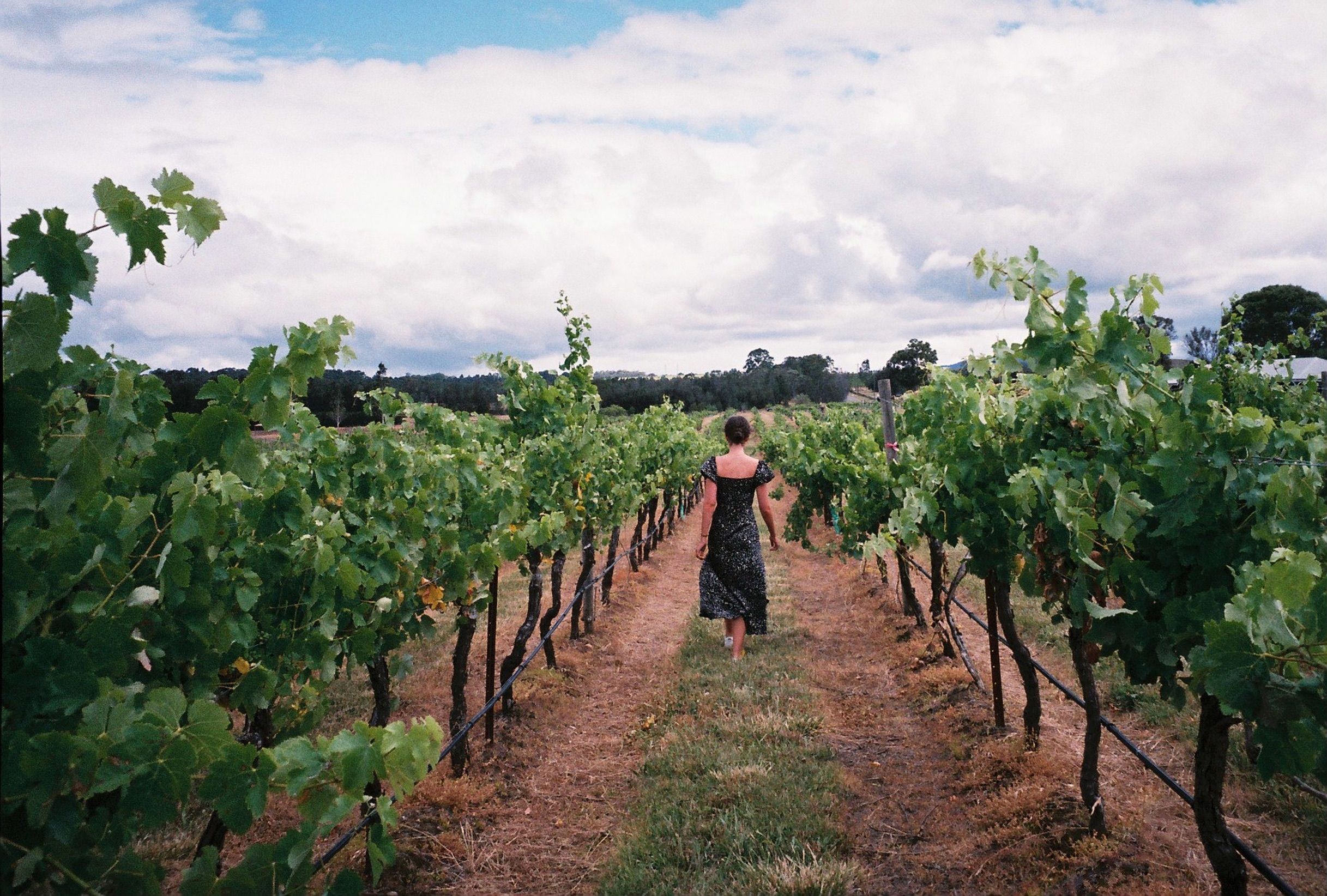
Clare Valley? Ah. Riesling. That’s interesting.
And this, I think, is where a guide such as Halliday becomes genuinely useful to someone thousands of kilometres away.
You aren’t merely being told which bottles are “best”.
You’re learning how to navigate Australian wine.
A simple way to use Halliday to discover Australian wine
If you’re new to Australian wine, try this:
1. Choose a region
Pick somewhere that catches your interest — Margaret River, Barossa Valley, Clare Valley, Yarra Valley, Hunter Valley, Tasmania, McLaren Vale or one of Australia’s many other wine regions.
Don’t worry about choosing the “right” one.
This is wine, not marriage.
You are allowed to change your mind.
2. Find out what the region is known for
Look at which grape varieties and wine styles repeatedly appear among the region’s better-reviewed wines.
You may start noticing patterns.
Perhaps Cabernet Sauvignon and Chardonnay keep appearing in Margaret River. Perhaps Riesling catches your eye in Clare Valley. Perhaps Semillon keeps turning up when you explore the Hunter Valley.
Already, you’re learning something more useful than a list of scores.
3. Look at several producers
This is where the winery star ratings can help.
Rather than chasing a single 97-point bottle that may be difficult or expensive to obtain, look at producers with a consistent record of highly rated wines.
If their famous flagship bottle isn’t available where you live, one of their more affordable wines might be.
4. Read the tasting notes
This deserves repeating.
A 96-point wine that sounds completely unlike anything you enjoy is probably not your ideal purchase.
Meanwhile, a 90-point wine whose tasting note makes you immediately think yes, that sounds lovely may be exactly the bottle you should buy.
There are no prizes for drinking wine you dislike more impressively.
5. Then see what you can actually buy
Once you have a few regions, varieties or producers in mind, search local wine merchants.
This works particularly well outside Australia.
Instead of trying to find one exact bottle recommended by Halliday, you might discover that your local merchant carries three wines from a producer you’ve just been reading about.
Now the guide has done its job.
It helped you discover something.
Don’t overlook Halliday’s Special Value wines
There is another Halliday symbol that may actually be more interesting to many everyday wine drinkers than an enormous score: Special Value.
Halliday uses a price-and-score calculation to identify wines offering particularly good value within their rating level.
That matters because wine scores and wine prices have an awkward habit of rising together.
A 98-point wine may be wonderful.
It may also cost enough that you begin wondering whether the bottle comes with a small piece of the vineyard.
A well-rated Special Value wine is therefore worth noticing.
And it raises a larger point about using wine guides intelligently:
The best wine to buy is not necessarily the wine with the highest score.
A delicious, characterful wine at a sensible price can be a much more exciting discovery than a famous bottle you can afford only after cancelling the family holiday.
Should you trust a Halliday score?
Yes — but perhaps “trust” isn’t quite the right word.
A Halliday score is an expert assessment made within an established tasting system. It can tell you that an experienced reviewer considered a wine to be a very good or outstanding example.
That’s valuable information.
But wine tasting is not laboratory analysis.
There is no machine into which we pour Cabernet Sauvignon and wait for the screen to flash:
94. CORRECT ANSWER.
Wine remains a sensory experience, and sensory experiences contain an unavoidable human element.
Your palate matters.
Your preferences matter.
The occasion matters.
Even what you’re eating with the wine matters.
So I wouldn’t use Halliday — or any critic — to tell me what I am supposed to like.
I’d use it to help me find things I might like to try.
That is a subtle difference, but an important one.
What does 95 Halliday points mean, then?
If you encounter a bottle carrying 95 Halliday points, you can now translate it fairly easily:
An expert Halliday reviewer considered that particular wine outstanding and of gold-medal standard.
That’s a strong recommendation.
It is a reason to pick up the bottle and look more closely.
Then look at the region.
Look at the grape.
Read the tasting note.
Consider the price.
And, if you’re outside Australia, see whether you can actually find the thing without purchasing an airline ticket to Melbourne first.
Most importantly, remember that the score is there to help you choose wine — not to choose it for you.
Wine scores are wonderfully convenient. They reduce weather, soil, grapes, fermentation, ageing, generations of knowledge and somebody’s painstaking work to two little digits.
Which is both extremely useful and slightly ridiculous.
Perhaps the best way to use Halliday Wine Companion, then, is not to ask:
Which wine has the most points?
But:
Where should I explore next?
Because a good wine guide shouldn’t simply lead us towards the highest-scoring bottle.
It should make the world of wine a little bigger.
Wine ratings are a useful starting point, but I agree that tasting notes and personal preferences matter just as much when choosing a bottle. Exploring different regions and grape varieties makes the wine journey even more interesting. Whether choosing a bottle for a dinner party or a special occasion, thoughtful selection makes all the difference. DC Wine & Spirits offers a variety of wine and champagne gift options for celebrating memorable moments.