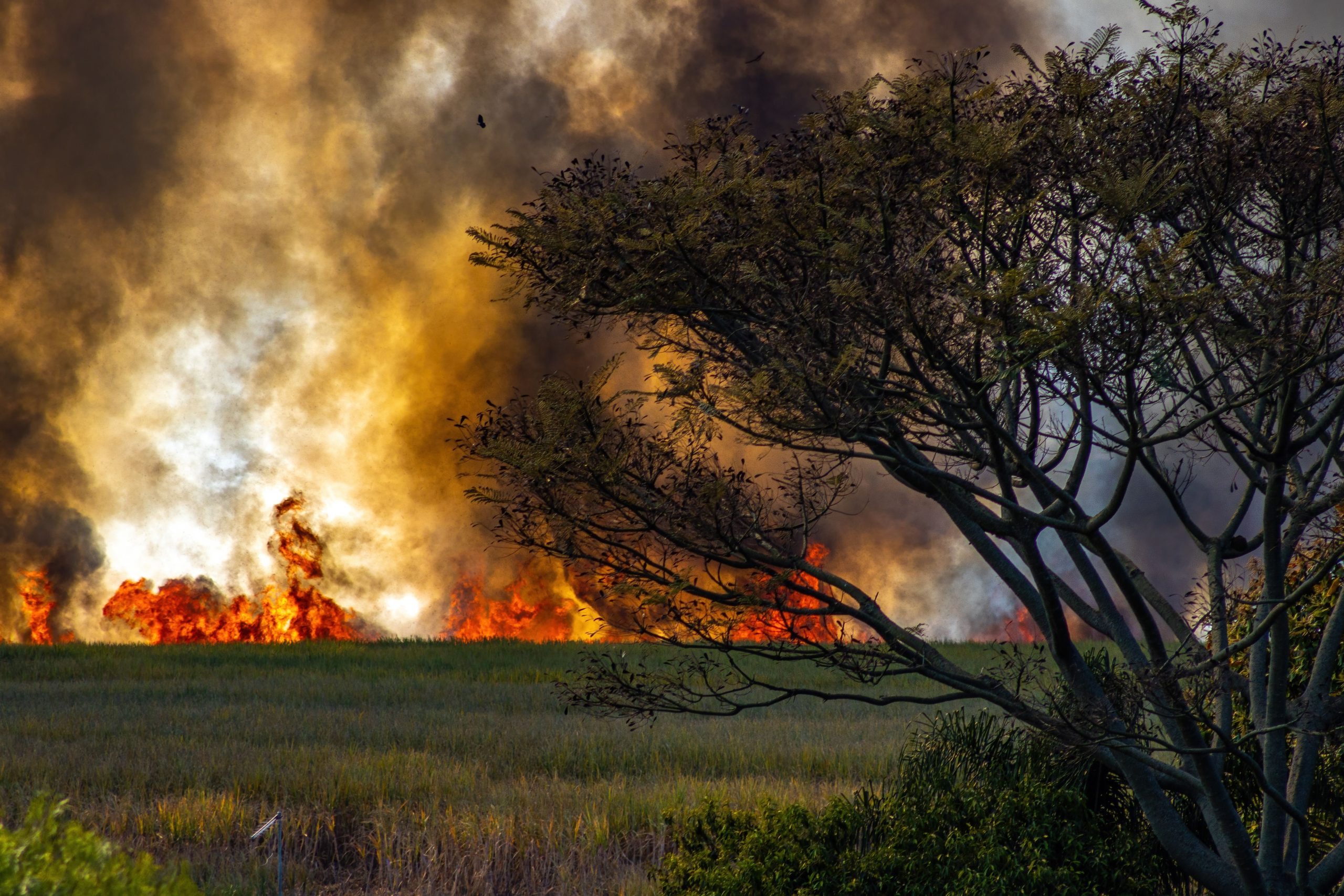
A vineyard doesn’t have to catch fire to lose its harvest. Sometimes, the greatest damage arrives on the wind.
When we think of wildfires destroying vineyards, we imagine blackened grapevines, scorched earth and entire rows of plants reduced to ashes. But there is another, less visible danger. One that can affect vineyards many kilometres away from the flames.
Smoke.
A wildfire may never come close to a vineyard, yet its smoke can settle over the ripening grapes. The vines remain green, the fruit looks healthy, and the harvest may seem perfectly normal. Nevertheless, the wine produced from those grapes could develop unpleasant smoky flavours.
As Europe faces increasingly challenging wildfire seasons, this hidden threat deserves greater attention.
Europe’s Growing Wildfire Problem
Wildfires have always been part of the Mediterranean landscape. However, extreme heat, prolonged drought and increasingly dangerous fire-weather conditions are creating greater challenges across many parts of Europe.
The figures illustrate the scale of the problem.
According to the European Commission’s Joint Research Centre, wildfires burned approximately 692,419 hectares across the European Union between January and 7 October 2026.
That is almost twice the long-term average for the same period, although below the extraordinary 2025 season.
The problem affects more than forests. Fires also threaten agricultural land, rural communities, homes and infrastructure.
Wine-producing countries such as Portugal, Spain, France, Italy and Greece face particular concerns because many vineyards lie in landscapes susceptible to summer drought and wildfires.
The European Forest Fire Information System (EFFIS) monitors these events using satellite observations and other data.
Readers can follow the latest figures and developments through the European Commission’s current wildfire situation in Europe.
When the Flames Never Reach the Grapes
Consider a vineyard that stands several kilometres from a forest fire.
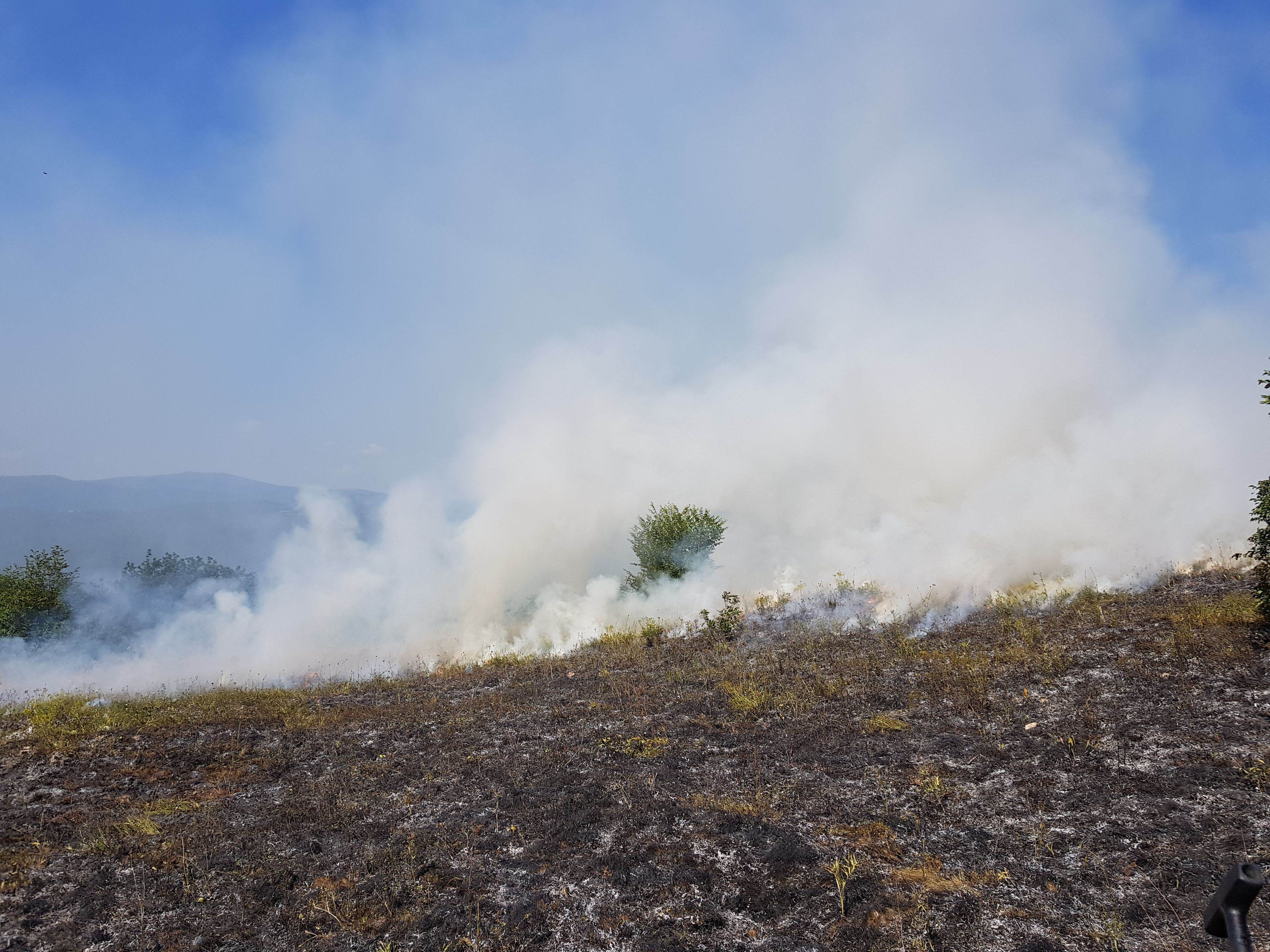
The wind carries smoke across the surrounding countryside. For several hours, perhaps even days, a grey haze hangs over the vines.
Eventually, the fire disappears, the skies clear, and everything seems to return to normal.
The vineyard has survived.
But has the wine?
Unfortunately, smoke contains chemical compounds that grapes can absorb while they grow. Some of these substances remain hidden inside the fruit until fermentation or ageing reveals their presence.
The resulting wine may develop unpleasant flavours reminiscent of ash, burnt wood or medicinal smoke.
Winemakers call this phenomenon smoke taint.
Our Wine Wiki explains the chemistry behind smoke taint, how it develops and why some affected wines reveal their smoky characteristics only after fermentation.
The important point is that physical damage and chemical contamination are two very different problems.
A vineyard can escape the fire itself yet still suffer a serious loss in wine quality.
However, visible smoke does not automatically mean that grapes are contaminated. The actual risk depends on exposure conditions, the grapes’ stage of development and several other factors.
The Difficult Decision: Harvest or Abandon the Grapes?
For winegrowers, few decisions are more painful than abandoning a harvest.
Grapevines require care throughout the year. Growers prune them in winter, protect the developing shoots in spring and manage the growing fruit through summer.
By harvest time, they have already invested months of labour and considerable money.
Then comes a wildfire.
If smoke has affected the vineyard, the grower faces a difficult choice.
Should the grapes be harvested as planned? Should the winery change its production methods? Or would making wine from the fruit create an even greater financial loss?
Unfortunately, the answer is rarely obvious.
Grapes can look and taste normal despite containing compounds that later produce unpleasant flavours.
Specialised laboratories can analyse fruit for smoke-related chemical markers. Winemakers may also produce small trial batches to assess the possible impact on finished wine.
According to the Australian Wine Research Institute, combining laboratory analysis with sensory assessment offers valuable guidance.
But testing costs money, takes time and cannot eliminate every uncertainty.
For smaller producers, who may depend on a single annual harvest, the consequences can be especially serious.
Why Some Wines Are More Vulnerable Than Others
Not all wines respond to smoke exposure in the same way.
Traditional red wine production involves fermenting grape juice together with the skins. This extracts colour, tannins and flavour, but it can also increase the extraction of smoke-related compounds.
White winemaking usually separates the juice from the skins earlier in the process.
Consequently, white and rosé production methods may sometimes reduce the sensory effects of smoke exposure.
This offers producers certain possibilities.
For example, a winery might consider making rosé from grapes originally intended for red wine.
However, changing wine styles does not guarantee success. Severe smoke exposure can also affect white and rosé wines.
Different grape varieties and vineyard conditions add further complexity.
A producer cannot simply assume that grapes are safe from smoke-related quality problems because they intend to produce white wine.
California and Australia: Lessons From Earlier Wildfires
Winegrowers in California and Australia have already experienced the devastating consequences of wildfire smoke.
California’s 2020 wildfire season demonstrated how widespread smoke could disrupt an entire wine region.
In Napa Valley and surrounding areas, some wineries rejected grapes or abandoned planned wines because of concerns about smoke-related contamination.
For producers of premium wines, releasing a visibly or noticeably flawed vintage can also threaten a reputation built over decades.
Australia has faced similar challenges, particularly during severe bushfire seasons.
These events have encouraged extensive scientific research into smoke exposure, grape chemistry and possible treatments.
The Australian Wine Research Institute has become an important source of practical guidance for wineries dealing with smoke-affected fruit.
Researchers continue to study ways to identify contamination earlier and reduce its effects during winemaking.
Yet one uncomfortable fact remains: preventing a problem is generally easier than removing it from wine after fermentation.
Spain’s 2026 Wildfires: Damage Beyond the Flames
The 2026 wildfire season provided another reminder of how far the consequences of fire can reach.
In Spain, severe wildfires affected large areas of the province of Ávila, including landscapes associated with the Sierra de Gredos wine region.
This mountainous area has become increasingly well known for its old-vine Garnacha. Some vineyards contain vines that have survived for many decades, producing wines with distinctive character.
Such vineyards cannot easily be replaced.
Even when the vines survive a wildfire, smoke exposure may threaten the quality of their grapes.
And when a fire directly damages old vines, the loss can extend far beyond a single vintage.
The problem does not necessarily end when firefighters extinguish the flames.
In October 2026, Reuters reported that ash and debris washed into waterways in Ávila following heavy rain, contaminating local water supplies.
The event illustrated another consequence of wildfires: damaged landscapes can remain vulnerable to erosion, flooding and pollution long after the flames disappear.
For agricultural communities, these secondary effects can complicate recovery.
A Vineyard Is More Than Its Grapes
Smoke contamination is only one part of the problem.
Wildfires threaten the entire environment on which a vineyard depends.
Damage to Soil and Vegetation
Severe fires can destroy ground vegetation and expose soil to erosion.
Heavy rain following a fire may wash away valuable topsoil, particularly on steep vineyard slopes.
The loss of organic matter and changes in soil structure can also affect future growing conditions.
Damage to Water Supplies
Water is essential for agriculture, particularly during prolonged periods of drought.
Wildfires can damage irrigation networks, pumps, water storage systems and electrical infrastructure.
Ash and sediment may also contaminate reservoirs or other sources of water.
For a vineyard already struggling with heat and limited rainfall, these problems can be particularly damaging.
Loss of Infrastructure
Even if grapevines survive, a winery may lose fencing, equipment, irrigation pipes, storage buildings or access roads.
The interruption of electricity and water supplies can interfere with both vineyard management and wine production.
Long-Term Economic Consequences
A vineyard may recover physically while its owner continues dealing with financial losses.
An abandoned harvest means losing potential income for that year.
Replacing damaged infrastructure requires additional investment, while lost contracts and reduced production can affect future business.
For small, family-run estates, these challenges may threaten the survival of the entire operation.
Can Vineyards Be Protected From Wildfires?
No vineyard can be made completely fireproof.
However, careful preparation can reduce certain risks and help protect people, buildings and agricultural infrastructure.
Important measures include managing dry vegetation, maintaining access routes, protecting critical equipment and preparing for possible interruptions to water and electricity.
Vineyard owners should also consider evacuation arrangements and follow local fire-safety requirements.
These measures are particularly important in rural areas where emergency services may face difficult terrain and rapidly changing fire conditions.
We previously explored practical preparation strategies in our article Preparing for Wildfires: How to Protect Your Home, Vineyard, and Life.
It covers measures such as water storage, independent pumping systems and fire-resistant landscaping.
However, property protection must never take priority over personal safety. During an active wildfire, official instructions and early evacuation remain essential.
Preventing flames from reaching a vineyard also does not guarantee protection from smoke exposure.
That requires separate monitoring, testing and winemaking decisions.
Can a Vineyard Recover After a Wildfire?
Fortunately, not every wildfire means the permanent loss of a vineyard.
Grapevines are perennial plants, and some can recover from limited damage if their trunks, roots and growing tissues survive.
The likelihood of recovery depends on the intensity of the fire and the condition of the vines.
Severe damage may require extensive retraining, replanting or complete vineyard reconstruction.
Smoke exposure presents a different situation.
Research indicates that smoke taint does not automatically carry over from one harvest into the next.
A vineyard whose grapes suffered smoke contamination one year may produce unaffected fruit the following season, provided there is no new exposure.
This distinction offers some hope.
The wine from one vintage may be lost, but the vineyard itself can continue producing grapes for many years.
Climate Change and the Future of Wine Regions
Wildfires do not affect every wine region equally, and annual fire activity can vary considerably.
Nevertheless, climate change is altering the conditions under which many vineyards operate.
Hotter temperatures, dry vegetation and prolonged drought can create favourable conditions for severe wildfires.
For the wine industry, this adds another challenge to those already associated with changing rainfall patterns, water shortages and extreme summer heat.
Vineyard management may increasingly require planning not only for grape quality and ripening, but also for fire exposure, smoke monitoring and infrastructure resilience.
Research into smoke taint and improved agricultural fire management will play an important role.
At the same time, reliable public information can help communities understand how wildfire risk changes from year to year.
Resources such as the European Forest Fire Information System make it possible to monitor broader patterns rather than relying solely on individual headlines.
When the Fire Is Gone, the Damage May Remain
Wildfires remind us that a vineyard is part of a much larger landscape.
The quality of its grapes depends not only on sunshine, soil and rainfall, but also on the health and stability of the surrounding environment.
A forest may burn several kilometres away. The vineyard may survive untouched, and its grapes may still appear perfect.
Yet the consequences can remain hidden until the wine reaches the cellar — or even the glass.
For winemakers, the challenge is no longer simply to protect their vines from flames. They must also understand what smoke can leave behind.
And perhaps that is the most unsettling aspect of wildfire damage to vineyards:
Sometimes, the fire never reaches the vineyard, but its effects still find their way into the wine.