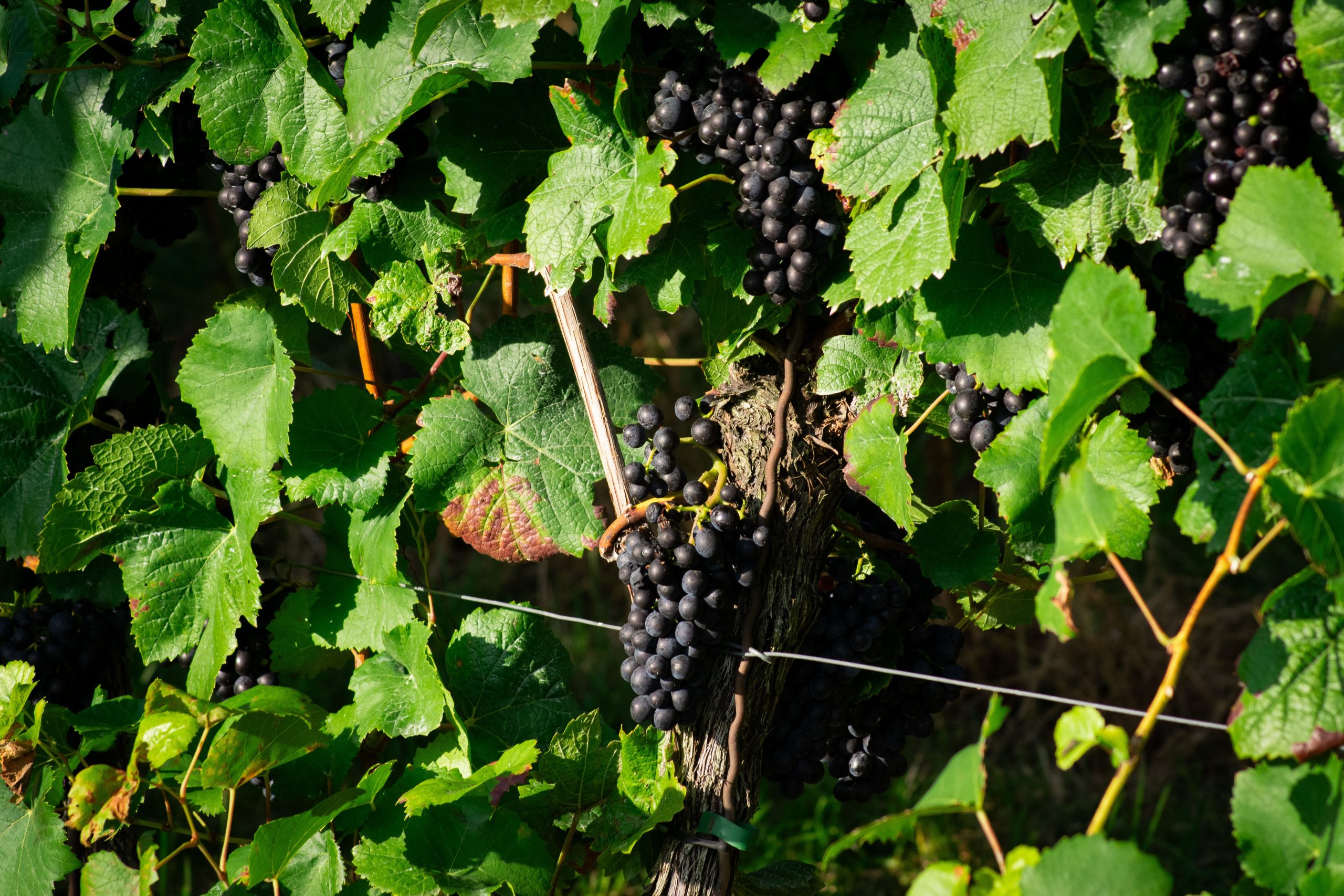
A few years ago, while visiting the Bairrada region, I was shown an old vine growing on an abandoned property that had once belonged to a distant relative of the family. The owner had passed away years earlier, and nobody seemed entirely sure how old the vine was.
What I remember most are the grapes.
They were unlike any I had tasted before. Instead of being juicy, the flesh was almost jelly-like and surprisingly sweet. Standing there in the late summer sunshine, I remember wondering how anyone could possibly make wine from something that felt more like fruit jelly than a grape.
Looking back, I think that moment perfectly captures what makes Portuguese wine so fascinating. You never quite know what you will find. Behind an old wall, at the edge of a forgotten garden, or growing beside a crumbling farmhouse, there may be a grape variety that has been there for generations.
And that helps explain why Portugal has more native grape varieties than almost any other wine-producing country in the world.
While countries such as France, Germany, and the United States are often associated with a handful of internationally recognized grapes, Portugal took a different path. Instead of replacing local varieties with a small number of global favorites, many Portuguese wine regions continued cultivating their traditional grapes, preserving a remarkable level of diversity.
Today, Portugal is home to more than 250 native grape varieties. Some are famous, some are rare, and some are so local that they are barely known outside a single valley. Together, they form one of the richest wine heritages on Earth.
What Is a Native Grape Variety?
Before going any further, it helps to understand what wine professionals mean by a “native” grape.
A native grape variety is one that originated in a particular country or region rather than being imported from elsewhere. Portugal has cultivated many of its grapes for centuries, and some may have been growing there since long before modern national borders existed.
This is one reason Portuguese wine can feel so different from wines produced elsewhere. Instead of relying heavily on internationally popular grapes such as Cabernet Sauvignon, Merlot, Chardonnay, or Sauvignon Blanc, Portuguese winemakers often work with varieties that many wine drinkers have never heard of.
That unfamiliarity can be intimidating at first.
It can also be one of the greatest pleasures of exploring Portuguese wine.
Why Portugal Never Became a Country of Just a Few Grapes
Portugal’s remarkable grape diversity did not happen by accident.
Part of the explanation lies in geography.
Although Portugal is not a large country, it contains an astonishing variety of landscapes. There are mountain ranges, river valleys, coastal plains, rolling hills, and hot inland regions. For much of history, travel between these areas was neither quick nor easy.
As a result, local communities often developed their own agricultural traditions with relatively little outside influence.
The grapes that performed well in one valley were passed down from one generation to the next. Over time, those varieties became part of local identity.
Anyone who has traveled through Portugal will recognize this tendency. Every region seems proud of doing things its own way. Sometimes every village appears to have its own opinion about food, wine, and tradition.
Fortunately for wine lovers, many of those traditions survived.
A Small Country With an Astonishing Number of Grapes
One of the easiest ways to appreciate Portugal’s diversity is to look at some of its major wine regions.
| Region | Famous Native Grapes |
|---|---|
| Douro | Touriga Nacional, Touriga Franca, Tinta Roriz |
| Bairrada | Baga |
| Vinho Verde | Alvarinho, Loureiro, Arinto |
| Dão | Encruzado, Jaen |
| Alentejo | Antão Vaz, Trincadeira |
| Lisboa | Arinto, Castelão |
| Madeira | Verdelho, Boal, Malvasia |
Each region developed its own relationship with the land, climate, and grape varieties available to it.
If you have ever enjoyed a glass of Madeira, for example, you have already encountered some of Portugal’s distinctive native grapes. If you would like to learn more about this fascinating fortified wine, you may also enjoy my article comparing Madeira and Port.
The remarkable thing is that these famous varieties are only a small part of the story.
The Grapes You Have Probably Heard Of
Touriga Nacional
Often described as Portugal’s flagship red grape, Touriga Nacional produces deeply colored wines with floral aromas, dark fruit flavors, and impressive aging potential.
It plays an important role in both Port wine and many of Portugal’s finest dry red wines.
Alvarinho
Known in neighboring Spain as Albariño, Alvarinho is one of Portugal’s most celebrated white grapes.
It produces aromatic wines with citrus notes, stone fruit flavors, and refreshing acidity.
Arinto
One of Portugal’s most versatile white grapes, Arinto thrives in several wine regions and is prized for its freshness and ability to age gracefully. Its versatility can also lead to some unexpected wines, as I recently discovered when tasting a Late Harvest Arinto from Bucelas.
Baga
The pride of Bairrada.
Baga can produce powerful wines with firm tannins and excellent longevity. In the right hands, it creates wines of remarkable complexity.
Since my encounter with that mysterious vine took place in Bairrada, I sometimes wonder whether it was related to one of the region’s traditional grapes. Unfortunately, nobody seemed to know the answer.
The Grapes You Probably Haven’t Heard Of
This is where Portuguese wine becomes truly fascinating.
Beyond the famous names lies an entire world of lesser-known varieties.
There are grapes such as Rufete, Jampal, Vital, Tinta Carvalha, Malvasia Fina, Fernão Pires, Rabigato, and dozens more that rarely appear on supermarket shelves outside Portugal.
One particularly interesting example is Negra Mole, a traditional grape from the Algarve that remains little known outside the region. If you are curious to discover it, this introduction to Negra Mole takes a closer look at the grape and its place in Algarve wine.
Some are cultivated on only a few hectares.
Others survive because local winemakers refused to abandon them.
And some may be quietly growing in old gardens, family plots, and forgotten corners of the countryside.
That is one of the things I love most about Portuguese wine culture. Not every interesting grape exists in a famous vineyard. Sometimes the most memorable discoveries happen in unexpected places.
Why Native Grapes Are Becoming More Important
For many years, wine regions around the world focused on international varieties.
Planting Cabernet Sauvignon or Chardonnay often made commercial sense because consumers already recognized the names.
Today, however, many winemakers are rediscovering the value of native grapes.
One reason is climate change.
Traditional wine regions are facing new challenges, including rising temperatures, changing rainfall patterns, and more frequent droughts.
Some native Portuguese grapes have spent centuries adapting to local conditions. That long history may make them particularly valuable in the future.
This is one reason researchers and winemakers are paying increasing attention to Portugal’s indigenous varieties.
A grape that once seemed old-fashioned may turn out to be exactly what future vineyards need.
The same conversation is taking place in many wine-growing regions. In fact, I recently explored another aspect of changing vineyard landscapes in my article about vineyards being converted to olive groves.
Wine is constantly evolving, and Portugal’s native grapes may become an important part of that evolution.
What Portugal Can Teach the Wine World
There is a lesson here that extends beyond wine.
For decades, globalization encouraged industries to become more uniform. In many cases, diversity was replaced by standardization.
Wine was not immune to this trend.
Yet Portugal demonstrates the value of preserving local traditions.
Instead of relying on a handful of internationally dominant grapes, Portuguese wine regions maintained an extraordinary range of varieties. That diversity gives winemakers more options, more resilience, and more opportunities for innovation.
It also gives wine lovers something increasingly rare: the chance to discover something genuinely different.
More Than Just Wine
When people talk about Portuguese grapes, they often focus on vineyards and wineries.
But I think the story is larger than that.
It is also a story about families.
A story about traditions passed from one generation to the next.
It is a story about old vines that continue growing long after the people who planted them are gone.
That abandoned property in Bairrada remains one of my favorite wine memories, even though I never learned the name of the grape.
Perhaps nobody knows it anymore.
Yet the vine continues to tell its story each harvest.
Final Thoughts
Portugal may not always receive the same international attention as France, Italy, or Spain, but when it comes to native grape diversity, it stands among the world’s most remarkable wine-producing countries.
Its hundreds of indigenous grape varieties offer a glimpse into centuries of agricultural history, regional identity, and winemaking tradition.
More importantly, they remind us that wine is not just a product.
It is a living connection between people, places, and the past.
And sometimes, all it takes is a handful of unusual grapes from an old forgotten vine to remind us just how much there is still left to discover.