Napa Valley has a small problem.
There are too many wineries.
Not objectively, of course. From the point of view of civilisation, having hundreds of wineries to choose from is probably a rather pleasant problem to have. But for a first-time visitor, it can produce a particular kind of panic:
How many can we fit into one day?
The answer is fewer than you think.
Napa Valley Vintners recommends planning for around three or four wineries in a day, while also allowing one to two hours at each stop. Visit Napa Valley likewise advises first-time visitors to plan ahead, book reservations and avoid trying to squeeze too much into one itinerary.
That may sound disappointingly restrained when you have crossed an ocean, rented a car and arrived with a notebook containing 17 wineries marked with stars.
But Napa is one of those places that becomes better when you stop trying to conquer it.
The idea is not to taste every wine.
The idea is to remember some of them.
First: Understand the Shape of Napa Valley
Napa Valley is not one compact little wine village where you wander out of your hotel and accidentally fall into six tasting rooms before lunch.
The valley stretches for roughly 30 miles, running north from the city of Napa through places such as Yountville, Oakville, Rutherford and St. Helena to Calistoga.
These names matter because they are not merely dots on a map. They can help you plan a day that makes geographical sense.
If your morning tasting is near Calistoga, your lunch is in Yountville and your afternoon appointment sends you back north again, you will spend a surprising amount of your wine holiday looking through a windscreen.
A much better plan is to choose one part of the valley for the day and explore it properly.
Wine is improved by terroir.
Travel itineraries, apparently, are improved by the same principle.
Two or Three Wineries Can Be Plenty
The temptation to book four, five or even six wineries in a day is understandable.
You are in Napa. There are vineyards everywhere. Surely it would be wasteful not to investigate them thoroughly.
Unfortunately, by winery number five you may remember only that someone mentioned Cabernet Sauvignon and that there was a very attractive tree outside.
Modern Napa tastings are often substantial experiences rather than a quick splash of wine at a counter. A visit may include a seated tasting, cellar tour, vineyard walk or food pairing.
Two well-chosen wineries before or around lunch and perhaps one later in the afternoon can make a very full day.
Napa Valley Vintners specifically recommends limiting travel between appointments and even provides itineraries designed around wineries only a few miles apart.
This is useful advice.
It also gives you time to actually speak to the person pouring the wine, look at the vineyard, notice differences between wines and occasionally drink some water.
Water is the least glamorous but possibly most useful wine-travel accessory ever invented.
Book Ahead
Napa is not a particularly good destination for the philosophy of we’ll just turn up and see what happens.
Some tasting rooms do accept walk-ins, especially around Downtown Napa, but both Visit Napa Valley and Napa Valley Vintners advise visitors to assume reservations may be needed and to plan winery visits in advance.
Many wineries operate primarily by appointment, and more elaborate experiences require reservations because staff, wine and sometimes food are prepared specifically for the visit.
That does not mean every minute of the holiday needs to be scheduled.
Quite the opposite.
Book the things you would genuinely be disappointed to miss, then leave breathing room around them.
A 10 a.m. winery appointment followed by an 11:30 appointment twenty minutes away sounds perfectly organised until the first tasting runs over because the host opens something interesting.
And really, if someone in Napa says, “Would you like to try one more wine?” this is not the moment when most of us suddenly become excellent timekeepers.
Don’t Choose Wineries Only by Fame
Naturally, first-time visitors often have a few famous Napa names on their wish list.
There is nothing wrong with that.
Napa Valley is especially associated with Cabernet Sauvignon, and some producers have become internationally recognised precisely because of it.
If that is the side of Napa that interests you most, our guide to Napa Valley wine gifts for the red wine lover in your life also looks at a few familiar Napa names and why the region’s reds have such broad appeal.
But try mixing one or two well-known estates with a smaller producer or a winery you knew nothing about before planning the trip.
Sometimes the winery you had never heard of becomes the one you talk about when you get home.
Wine travel is rather good at doing that.
Leave Time for Lunch — Proper Lunch
It is possible to treat lunch as an irritating interruption between tastings.
This is a mistake on several levels.
First, Napa has an excellent food culture.
Second, wine on an empty stomach is an efficient way of turning a sophisticated tasting itinerary into an unexpectedly cheerful afternoon.
Third, sitting down for an hour or two gives your palate a chance to recover.
You do not necessarily need a grand tasting menu. A relaxed café, deli, picnic or simple restaurant can be exactly right.
The important thing is to allow enough time that lunch does not become something eaten anxiously while checking the clock.
If your holiday begins to resemble airport security, you have overplanned it.
And if you like the idea of making one meal deliberately simple, our guide to creating the perfect wine and cheese picnic has plenty of ideas for choosing wines, cheeses and a comfortable outdoor setting.
Just check local rules before unpacking your basket among the vines. Not every beautiful patch of Napa countryside is automatically your picnic lawn.
Choose Where You Stay Carefully
Where you sleep can shape the entire trip.
Downtown Napa is useful if you want plenty of restaurants, bars and tasting rooms within easy reach.
Yountville appeals to visitors who want excellent food and a compact, polished base.
St. Helena puts you very much in the heart of wine country and works well for exploring the central and northern valley.
Calistoga, farther north, has a more relaxed character and is also well known for spas and hot springs.
There is no universally correct base.
The correct one is the place that means you spend less of your holiday commuting between things you actually came to enjoy.
Visit Napa Valley describes the region as five towns spread across roughly 30 miles, so choosing a base that suits the wineries and activities on your own list can make a surprisingly big difference.
Consider a Driver
There comes a point during wine-trip planning when somebody says:
“I’ll drive.”
This sounds wonderfully responsible.
It becomes less wonderful when that person realises everybody else is tasting Cabernet while they are examining mineral water.
If your budget allows, hiring a driver or joining an organised wine tour can be one of the more sensible expenses of the trip.
It also removes the need to perform complicated mental arithmetic about exactly how much wine was swallowed rather than spat.
For anyone driving themselves, the rule is simple: tasting portions still contain alcohol.
Spitting is completely normal in wine tasting, and Napa Valley Vintners actively encourages visitors to spit or pour out excess wine rather than feeling obliged to finish every glass.
This is one occasion on which behaving like a professional wine taster is considerably more sensible than behaving like an enthusiastic tourist.
Remember That You Do Not Have to Drink Everything
This can feel strangely difficult when someone has just poured you an expensive wine.
But a tasting is not an examination.
You are allowed to leave wine in the glass.
You are allowed to spit.
You are allowed to say that one style simply isn’t for you.
In fact, tasting selectively usually means you notice more.
By the third or fourth Cabernet, the subtle distinctions you enthusiastically discussed at 10:30 in the morning can start merging into a general impression of “very nice red wine.”
Your palate has limits.
Fortunately, Napa will still be there tomorrow.
Visit During Harvest — But Expect Company
For many wine lovers, harvest is the most exciting time to visit.
Napa’s harvest generally runs from late summer into autumn, with sparkling-wine grapes and many white varieties picked first, followed later by red varieties such as Cabernet Sauvignon.
During harvest, wineries are working rather than merely presenting wine to visitors: grapes arrive, sorting tables become busy and fermentation begins.
In 2026, the season began unusually early. Visit Napa Valley reported the first harvest on July 21, when Chardonnay was picked in Rutherford for sparkling wine. Cabernet Sauvignon, as usual, comes later in the harvest cycle.
It is fascinating.
It is also popular.
Visit Napa Valley describes August through October as peak travel time during harvest and recommends booking winery visits and restaurants in advance.
And remember that harvest does not perform for tourists.
Grapes are picked when they are ready, not when your flight lands.
That unpredictability is part of what makes seeing a working wine region so interesting.
Spring and Winter Have Their Advantages Too
Harvest receives much of the attention, but Napa is not a one-season destination.
Spring brings green vineyards and yellow mustard flowers across the valley floor.
Summer offers long days and plenty of opportunities for outdoor tastings.
Winter is quieter, cooler and often considerably more relaxed.
Visit Napa Valley itself points out that there is not really much of an off-season: each part of the year offers a different version of the valley.
If your priority is seeing wineries rather than being seen seeing wineries, the quieter months can be very appealing.
And Cabernet tastes perfectly good when you are wearing a jumper.
Possibly better.
Do Something That Isn’t a Wine Tasting
This sounds almost heretical in Napa Valley, but it improves a wine trip enormously.
Walk.
Cycle.
Have coffee.
Browse a shop.
Sit somewhere and look at vineyards without anyone explaining their soil composition to you.
Napa is agricultural country as well as a wine destination, and simply moving through the landscape helps put the wines into context.
There are also winery experiences that go well beyond a conventional seated tasting. Current offerings around the valley include vineyard tours, food pairings and outdoor experiences, although many of the more elaborate options need to be booked in advance.
And if you spend every waking hour holding a wine glass, even the most beautiful tasting room eventually begins to feel suspiciously like work.
Don’t Try to Become a Napa Expert in Three Days
One of the pleasures of visiting a famous wine region is discovering how much you do not know.
Perhaps you arrive convinced Napa is mainly about powerful Cabernet Sauvignon and discover that you love a Chardonnay from Carneros.
Perhaps you become fascinated by mountain vineyards.
Perhaps the bottle you remember most costs less than the prestigious one you had planned the entire holiday around.
Allow this to happen.
The purpose of wine travel is not to return home having completed Napa Valley.
Nobody completes Napa Valley.
There are hundreds of wineries, numerous distinct growing areas and enough Cabernet Sauvignon to keep a curious drinker occupied for a very long time.
A first trip should therefore be exactly that:
a first trip.
A Simple Three-Day Napa Valley Plan
If you need somewhere to begin, keep it almost suspiciously simple.
On Day One, settle in and explore your base. Have lunch, visit one winery or downtown tasting room and enjoy dinner without worrying that you have already “wasted” half a day.
On Day Two, choose one section of the valley. Book two winery visits, allow a long lunch and add a third tasting only if the timing genuinely works.
On Day Three, do something slightly different: perhaps a vineyard tour, a smaller producer, a food-and-wine experience or simply another part of the valley. Finish somewhere you can linger rather than somewhere you have to race away from.
You will almost certainly leave with wineries still on your list.
Good.
That is how Napa persuades you to come back.
And What About the Bottles That Follow You Home?
It is entirely possible to visit Napa Valley without buying wine.
It is also entirely possible to walk past a bakery without buying bread.
These things happen, apparently.
If a few bottles do come home with you, think about where you will store them before placing your favourite Napa Cabernet on a sunny kitchen shelf.
You do not need a stone cellar beneath a château. Our guide to creating a little wine cellar at home, even without a basement explains how even a modest collection can be stored more carefully.
A bottle brought back from a wine trip is rarely just another bottle.
It tends to come with a place attached to it.
The Best Napa Valley Itinerary Has Empty Spaces
Wine travel has a peculiar tendency to become competitive.
How many wineries did you visit?
How many famous bottles did you taste?
Did you get to Oakville? Rutherford? St. Helena? Calistoga?
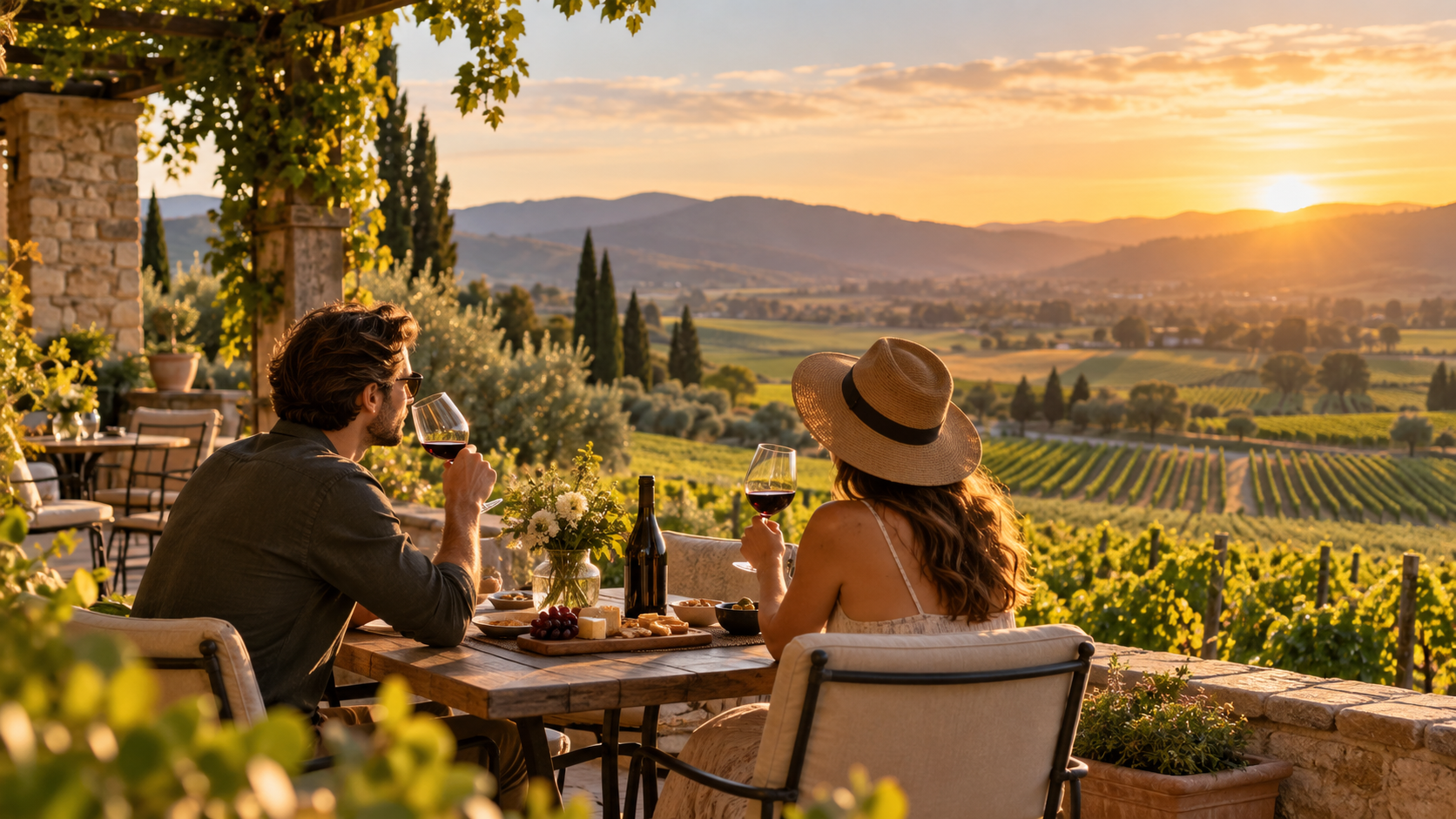
But the moments that remain with you afterwards are often the ones you could never have scheduled: a conversation with someone at a winery, sunlight across a vineyard in the late afternoon, an unexpected bottle at lunch, or simply sitting somewhere beautiful with nowhere you need to be for another hour.
So make reservations.
Plan your route.
Choose your wineries carefully.
Then deliberately leave some blank spaces.
Napa Valley has spent decades making wine slowly.
It seems slightly impolite to rush through it.