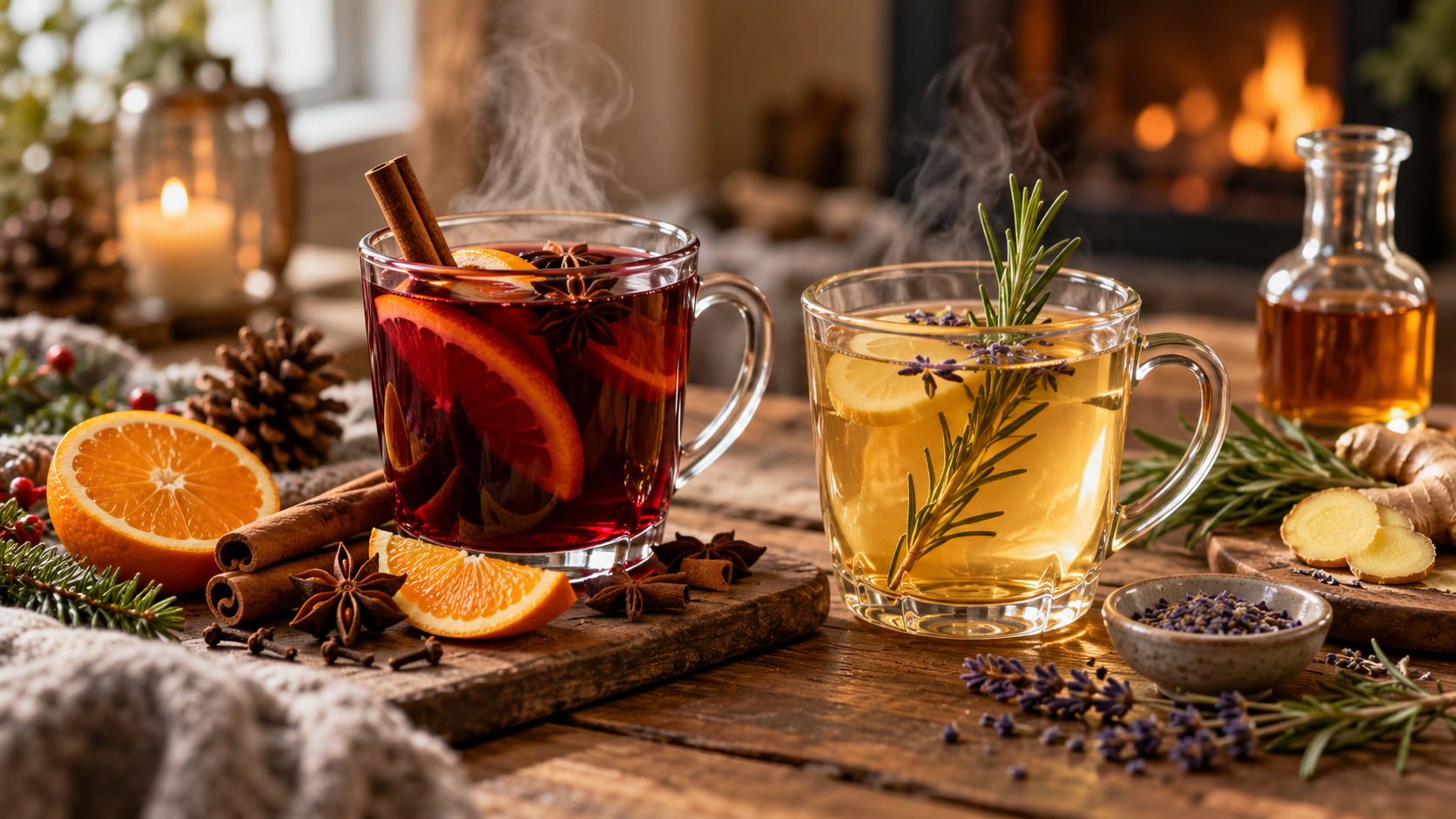
There is something about the colder months that changes the way we enjoy wine.
During summer, we reach for chilled white wines, refreshing rosés, and perhaps a sparkling glass on a warm evening. But when autumn arrives and the days become shorter, a different kind of wine begins to sound appealing.
Something warm. Something fragrant. Something that fills the kitchen with the scent of spices, herbs, and fruit.
Across Europe, people have been warming wine for generations. Some recipes are simple, while others turn an ordinary evening into a little celebration.
And perhaps there is still room to invent a new one.
1. Mulled Wine: The Winter Classic
Let’s begin with the best-known hot wine drink: mulled wine.
In Germany, it is called Glühwein. The French know it as vin chaud, while Scandinavian countries enjoy their own variations, including glögg.
Most traditional recipes combine red wine with cinnamon, cloves, star anise, citrus fruit, and a little sugar or honey.
The secret is gentle heating. Wine should become pleasantly hot without reaching a rolling boil. Too much heat can change its flavour and drive off alcohol and delicate aromas.
What makes mulled wine so appealing is its simplicity. A reasonably priced red wine, a few spices, and a little patience are all you need.
If you’re curious about what happens to wine when it is heated, discover the science behind mulled wine.
You can also explore our Mulled Wine guide for more background on this winter favourite.
2. Feuerzangenbowle: When Wine Meets Fire
Some winter drinks are about warmth. Others are about entertainment.
Germany’s Feuerzangenbowle manages both.
This traditional drink begins with warm red wine, much like Glühwein. But above the pot sits a cone of sugar soaked in strong rum.
The sugar is carefully set alight, producing blue flames as the caramelised sugar melts into the wine below.
It is a beautiful spectacle, particularly in a dimly lit room.
For many German families, Feuerzangenbowle is more than a drink. It is a winter tradition, often associated with memories of family gatherings and festive evenings.
It certainly brings back some rather magical childhood memories for me.
You can read the full story in Feuerzangenbowle: A Childhood Memory, a Flaming Winter Ritual.
Because this traditional preparation involves open flames and highly flammable alcohol, it should only be attempted with proper equipment, adequate precautions, and experienced adult supervision. Never pour rum directly from a bottle near a flame.
3. Glögg: Scandinavia’s Spiced Winter Wine
If you travel north during winter, you may encounter another warming tradition: glögg.
Popular in Sweden and neighbouring Scandinavian countries, glögg resembles mulled wine but often has a richer, sweeter character.
Recipes vary, but common additions include cardamom, cinnamon, cloves, ginger, and sometimes spirits.
One particularly charming tradition is serving glögg with raisins and blanched almonds in the cup.
The result is more than a hot drink. It becomes a small winter treat.
4. Hot White Wine: A Lighter Alternative
Red wine may dominate the winter drinks scene, but white wine deserves some attention too.
When gently warmed, white wine can become wonderfully aromatic.
Instead of relying on the stronger spices often associated with red mulled wine, consider ingredients such as apple, lemon peel, fresh ginger, and delicate herbs.
Dry or off-dry white wines with fresh acidity generally make a good starting point.
And that brings us to an experiment.
5. Rosemary, Ginger & Lavender White Wine with Moscatel
A new winter wine creation from The Little Cellar Wine Company let’s call it “The Winter Garden”.
What if we tried something different?
Instead of cinnamon, cloves, and the usual Christmas spices, imagine a gently warmed white wine infused with rosemary, a pinch of fresh ginger, and just a hint of lavender.
Then, just before serving, we add a splash of Portuguese Moscatel.
It sounds rather promising, doesn’t it?
Rosemary contributes a fragrant, almost pine-like aroma. Ginger provides a lively touch of spice, while lavender adds a delicate floral note.
And the Moscatel?
That brings the sweetness and a little Portuguese sunshine into the middle of winter.
The Winter Garden
Ingredients (2–3 servings)
- 500 ml dry white wine
- 1 small sprig of fresh rosemary
- 1 thin slice of fresh ginger
- A tiny pinch of food-grade culinary lavender (about 1/8 teaspoon dried flowers or less)
- 30–45 ml Moscatel de Setúbal
- A thin strip of lemon peel (optional)
How to Prepare It
- Pour the white wine into a small saucepan.
- Add the rosemary, ginger, and lemon peel, if using.
- Warm gently over low heat without boiling.
- Add the lavender during the final 2–3 minutes of infusion.
- Remove from the heat and strain out the herbs and ginger.
- Stir in the Moscatel just before serving.
- Taste and adjust. A little extra Moscatel can add sweetness if the white wine is particularly dry.
Serve in heatproof glasses, perhaps with a tiny fresh rosemary sprig for decoration.
What Might It Taste Like?
This is an experimental recipe, so the final balance will depend on the wine and the strength of the herbs.
The aim is a fragrant drink that feels lighter and fresher than traditional mulled red wine.
The rosemary should remain subtle. Ginger should provide gentle warmth rather than sharp heat. Lavender should be barely noticeable on its own, contributing a little floral complexity.
Moscatel de Setúbal seems especially interesting here because of its typical notes of orange blossom, citrus, and honey.
You can learn more about this Portuguese wine in our guide to Portuguese fortified wines.
A little advice: Start with less lavender than you think you need. You can always add more, but once it dominates the drink, there’s no easy way back.
Which Wine Is Best for Hot Wine Drinks?
You don’t need an expensive bottle to prepare a good warm wine drink.
In fact, heating a particularly fine or complex wine may mean losing some of the delicate characteristics that make it special.
For red mulled wine, choose a fruity, balanced red without excessive oak or tannin.
For warmed white wine, look for something fresh and aromatic with moderate acidity.
Above all, choose a wine that you would be happy to drink on its own. Heating and adding spices cannot rescue a wine that already tastes unpleasant.
If you’re looking for more seasonal inspiration, take a look at our article on the best winter wines to keep you warm.
A Little Warmth for the Colder Months
Wine has always been part of the way people celebrate seasons, gather with friends, and create traditions.
Sometimes those traditions have lasted for centuries.
Sometimes they begin with a new idea, a saucepan, a few herbs from the garden, and a bottle of wine.
Who knows? Perhaps this winter is the right time to invent a new favourite.
After all, every tradition has to begin somewhere.