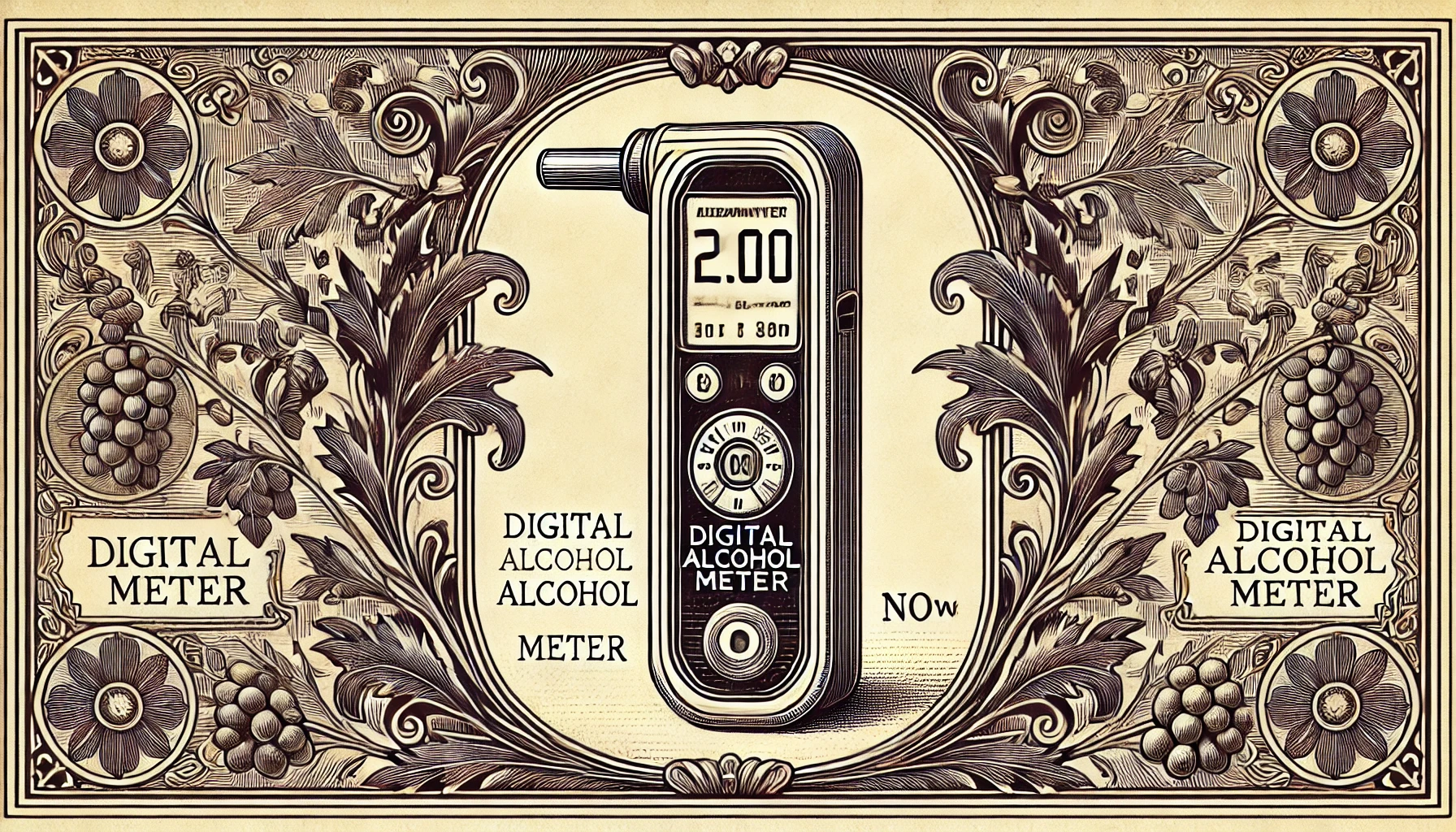
Digital Alcohol Meter: Can It Measure the ABV of Wine?
Knowing how much alcohol is in a wine sounds like something modern technology ought to have solved rather neatly by now.
Insert wine. Press button. Receive ABV.
And, with the right equipment, it can be almost that simple.
Digital alcohol meters and analysers can provide fast and accurate alcohol measurements, which is why they are widely used in wineries, breweries, distilleries and laboratories.
There is, however, an important detail hidden behind the convenient word digital: not all digital alcohol meters work in the same way, and not every device sold as an alcohol meter is suitable for measuring wine.
Wine is a complicated mixture of alcohol, water, sugar, acids and other dissolved substances. A device that works perfectly well with a simple mixture of alcohol and water may therefore give misleading results when presented with a glass of wine.
So, before buying a digital alcohol meter, it helps to know exactly what it measures.
What Is a Digital Alcohol Meter?
A digital alcohol meter is an electronic instrument used to determine or estimate the alcohol concentration of a liquid.
The result is usually displayed as ABV (Alcohol by Volume), the familiar percentage found on wine labels. A wine labelled 12% ABV contains approximately 12% alcohol by volume.
Unlike traditional manual instruments, digital alcohol analysers use electronic sensors and calculations to obtain and display their results.
But “digital alcohol meter” is a broad term.
Different instruments may use very different measurement methods, and this matters considerably when testing something as complex as wine.
How Do Digital Alcohol Meters Work?
Depending on the instrument, a digital alcohol analyser may use one or a combination of several technologies.
Density Measurement
Some digital meters measure the density of a liquid electronically.
This can be extremely accurate when measuring a relatively simple alcohol-and-water mixture. Wine, however, contains sugar, acids and other dissolved substances that also affect density.
For that reason, a simple density measurement cannot always distinguish between the effect of alcohol and everything else in the wine.
Oscillating U-Tube Technology
Professional digital density meters often use an oscillating U-tube. A small sample is introduced into a tube that is made to oscillate, and changes in its oscillation are used to calculate the density of the liquid very precisely.
Again, density alone does not necessarily reveal the alcohol content of a complex beverage such as wine. Professional systems may therefore combine density measurement with additional analysis or appropriate sample preparation.
Infrared and Other Spectroscopic Methods
More advanced beverage analysers may use infrared or other spectroscopic techniques to analyse the composition of a sample.
These instruments can be designed specifically for wine and may measure alcohol alongside other parameters.
Not surprisingly, equipment capable of doing all this tends to belong at the more expensive end of the wine gadget cupboard.
Can a Digital Alcohol Meter Measure Finished Wine?
Yes—but only if the instrument is designed for that purpose.
This is probably the most important thing to understand when shopping for an alcohol meter.
A device may be described online as a “digital alcohol meter” and display alcohol as a percentage, but that does not automatically mean it can accurately analyse finished wine.
Some instruments are intended primarily for spirits or simple ethanol-and-water mixtures. If sugar and other dissolved substances are present, their readings can be affected.
Wine is considerably less cooperative.
If you want to test the ABV of finished wine, look specifically for an analyser that states that it is suitable for wine or complex fermented beverages, and check the manufacturer’s specifications regarding sample preparation, measurement range, accuracy and calibration.
Digital Alcohol Meter vs Alcohol Refractometer
A digital alcohol meter and a refractometer can both have a place in winemaking, but they are not necessarily doing the same job.
A refractometer is particularly useful for measuring sugar in grape juice or must and for following fermentation. With appropriate before-and-after readings and corrections, it can also help estimate the alcohol produced during fermentation.
If you’d like to understand the difference in more detail, see our guide to the alcohol refractometer.
A suitable digital wine analyser, on the other hand, may be able to analyse an already finished wine without requiring the original pre-fermentation reading.
That can make it much more useful if your question is simply:
“How much alcohol is in this wine now?”
The important word, once again, is suitable.
What About Dealcoholised or Home-Treated Wine?
This is an interesting use case because you may know the wine’s original ABV but want to find out how much alcohol remains after reducing it.
A suitable digital wine analyser may be able to provide an estimate or measurement of the remaining alcohol, depending on the technology used.
However, home treatment can change the composition of the wine, and residual sugar and other components can interfere with instruments that rely primarily on density.
If you are simply curious whether you have reduced a wine from roughly 13% to something substantially lower, an appropriate home-testing device may be useful.
If you need to establish that the wine is below a particular legal, commercial or dietary threshold, you need a much higher degree of confidence. In that situation, professional laboratory analysis is the safer choice.
Advantages of Digital Alcohol Meters
When the right instrument is used for the right beverage, digital alcohol measurement has several advantages.
Fast results: Many instruments can produce readings quickly.
Small samples: Some systems require only a relatively small amount of wine.
Easy-to-read results: The measurement is displayed digitally, reducing errors associated with manually reading a scale.
Repeatability: Good-quality instruments can provide consistent measurements when correctly calibrated, maintained and operated.
Specialised wine analysis: Professional beverage analysers can be designed specifically to deal with the complex composition of wine.
There is an obvious attraction to pressing a button instead of peering through glassware while wondering whether you are reading the meniscus correctly.
Technology does occasionally earn its keep.
Limitations to Consider
Digital does not automatically mean accurate.
Before choosing an alcohol meter, consider the following:
Not every meter is suitable for wine. Devices intended for spirits or ethanol-water mixtures may be affected by the sugar and other compounds found in wine.
Accuracy varies considerably. There is no single accuracy figure that applies to every digital alcohol meter.
Calibration may be necessary. Requirements vary by instrument, and some professional devices require regular calibration or verification.
Temperature matters. Good instruments may compensate for temperature automatically, but this does not mean measurement conditions can always be ignored.
Sample preparation may be required. Depending on the analytical method, the wine may need to be filtered, degassed, distilled or otherwise prepared before testing.
Professional equipment can be expensive. High-precision wine analysers are very different instruments from inexpensive handheld alcohol meters sold for home use.
Always check the manufacturer’s specifications rather than relying solely on the words “digital alcohol meter” on the product listing.
How to Use a Digital Alcohol Meter
Because different instruments use different technologies, there is no universal procedure.
In general, however, you will need to:
- Check that the instrument is suitable for wine.
- Calibrate or verify the device if required by the manufacturer.
- Prepare the sample according to the instructions. This may include removing bubbles, filtering the wine or bringing it within a specified temperature range.
- Introduce the sample into the measuring chamber or sensor.
- Allow the instrument to complete its analysis.
- Record the result, usually displayed as % ABV.
- Clean the measuring components carefully after use.
For alcohol analysis, following the instructions for the particular instrument is much more important than following a generic online procedure.
Should a Home Winemaker Buy One?
That depends largely on what you want to know.
If you are making wine from scratch and mainly want to monitor fermentation and estimate the eventual alcohol level, traditional tools may be perfectly adequate. A hydrometer or alcohol refractometer is considerably less expensive and can provide the information most home winemakers need.
A digital analyser becomes more interesting if you regularly need to measure finished wines, want greater convenience and repeatability, or simply enjoy having impressive wine equipment on the workbench.
For professional wineries, accurate digital analysis can be valuable for quality control and consistency.
For somebody making six bottles in the kitchen once a year, it may be somewhat harder to justify.
Frequently Asked Questions
What does a digital alcohol meter measure?
Depending on the device, it may measure density, analyse the sample spectroscopically or use another method to determine or estimate alcohol concentration. Results are commonly expressed as ABV (Alcohol by Volume).
Are digital alcohol meters accurate?
They can be extremely accurate, but accuracy depends entirely on the instrument, technology, calibration, sample and type of beverage. A blanket accuracy figure cannot be applied to all digital alcohol meters.
Can I use a digital alcohol meter for wine?
Only if the device is suitable for wine. Check the manufacturer’s specifications carefully. A meter intended for spirits may not accurately measure wine because sugar, acids and other dissolved substances can interfere with the measurement.
Can I measure the alcohol left in wine after removing some of it?
Potentially, yes, if you use an analyser designed for finished wine. For an approximate home measurement, an appropriate device may be sufficient. If you need a certified or highly accurate ABV, professional analysis is preferable.
Is a digital alcohol meter better than a refractometer?
Not necessarily—they are useful for different purposes. A refractometer is an excellent tool for measuring sugar and monitoring fermentation, while an appropriate digital wine analyser can be more useful when you want to determine the alcohol content of an already finished wine.
Final Thoughts
Digital alcohol meters can make measuring wine considerably quicker and easier, but the name on the box doesn’t tell the whole story.
The important question isn’t simply:
“Is it digital?”
It is:
“Is it designed to measure alcohol accurately in wine?”
For home winemaking and fermentation monitoring, a refractometer or hydrometer may be all you need. For analysing finished wine, a suitable digital wine analyser can be much more useful.
And when the exact number genuinely matters, professional laboratory testing remains difficult to beat.
As with so many things in wine, the right tool depends on what you’re actually trying to find out.
Curious about more wine terms and insights? Visit our Wine Wiki section and explore the basic wine terms for expert definitions and tips!