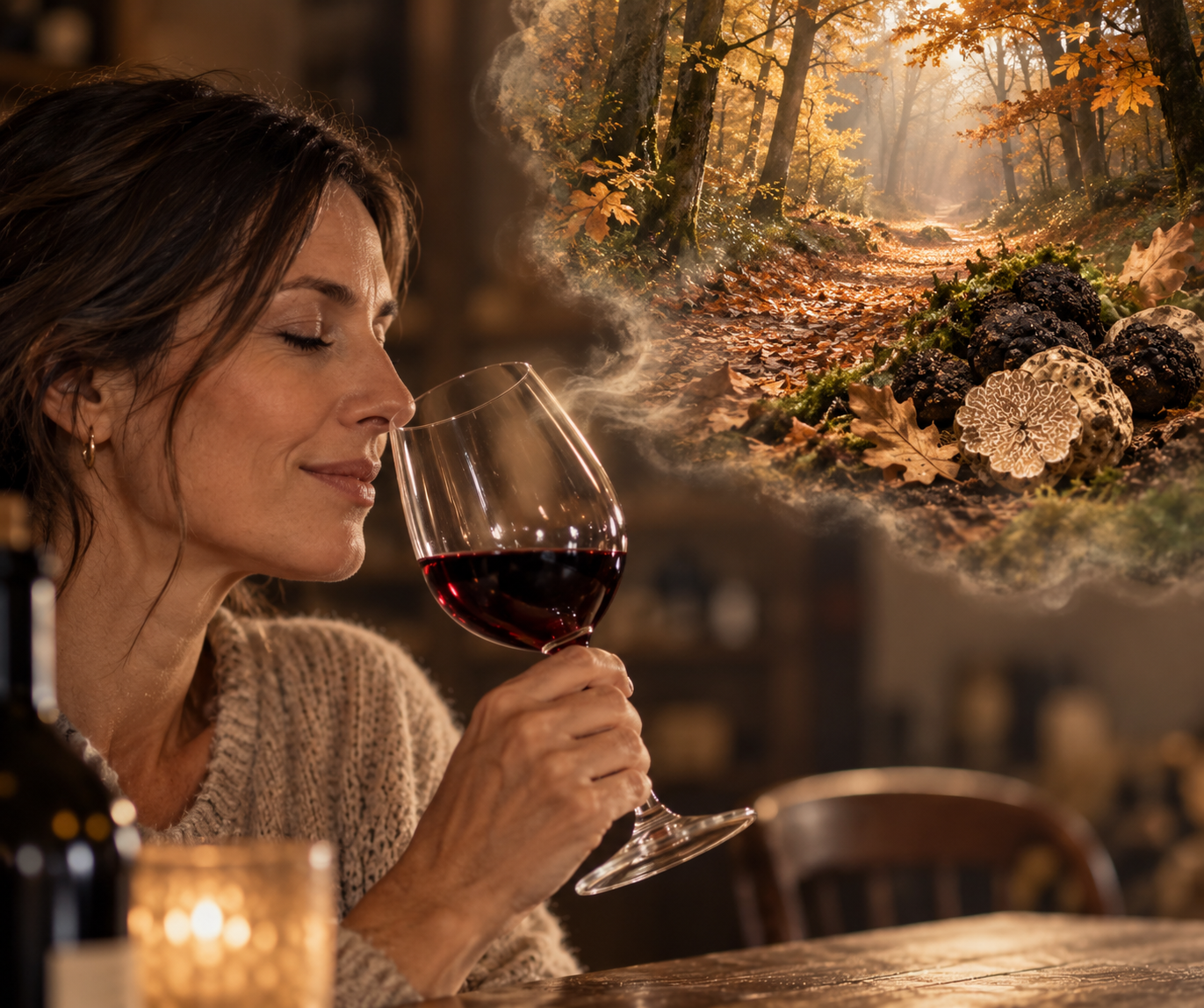
There is something about the beginning of autumn that brings truffles back into our imagination.
In Piedmont, anticipation is already building for the prized white truffles hidden beneath the soil. The 2026 International Alba White Truffle Fair begins on 10 October and runs until 6 December, just as one of the world’s most celebrated truffle regions enters its most aromatic time of year.
But you don’t have to be sitting in a restaurant in Piedmont to know that truffle season is approaching.
This September, halfway around the world, Burger King Korea welcomed autumn with an entire truffle range: its returning Truffle Mushroom Whopper, a Hot Truffle Mushroom Whopper, Deep Truffle Fries, a Truffle Mushroom Pie Royal and a new Maison Truffle Cheese Burger.
The Truffle Mushroom Whopper first appeared there in 2017. After customer demand led to its return in 2023, it became a recurring autumn menu, and this year Burger King says it has strengthened the truffle flavour after consumer research.
From white truffles in Alba to cheeseburgers in Seoul, truffle has travelled remarkably far from the forest floor.
And that raises an interesting question.
Why do we like it so much?
Because perhaps the most remarkable thing about a truffle isn’t really its taste at all.
What Does a Truffle Actually Taste Like?
Try describing the taste of a truffle without describing its smell and things quickly become difficult.
That’s because what we casually call taste is actually a much richer experience: flavour.
Our taste receptors detect sensations including sweet, sour, salty, bitter and umami. But while we eat, volatile molecules released from food also travel from the mouth into the nasal cavity. This is called retronasal olfaction, and researchers consider olfaction a critical part of how we experience flavour.
It explains something most of us have experienced ourselves. When our nose is badly blocked, food can seem strangely dull even though our tongue is still working.
And truffles are extraordinary little packages of aroma.
Researchers have identified more than 200 volatile organic compounds across different truffle species, while the aromatic profile of a single species commonly contains dozens of them. These include sulfur-containing compounds such as dimethyl sulfide and dimethyl disulfide, as well as other molecules associated with fungal and earthy aromas.
The exact mixture differs between species, which helps explain why one truffle doesn’t necessarily smell like another.
The famous Italian white truffle, Tuber magnatum, has a particularly distinctive aromatic fingerprint. One of its characteristic compounds is 2,4-dithiapentane, a sulfur-containing molecule strongly associated with its aroma.
Individually, words such as sulphurous, fungal, earthy and garlicky hardly sound like the language of luxury.
Together, however, they become something quite different.
They become truffle.
Are We Smelling More Than We Are Tasting?
This makes truffle a wonderful example of just how much our nose can influence what we believe we are tasting.
Think of something as simple as mashed potatoes.
Potato, butter, perhaps cream and salt. Add a powerful truffle aroma and suddenly the dish can seem more complex, intense and luxurious.
The potato hasn’t suddenly become sweeter or saltier.
What has dramatically changed is the aromatic information reaching the brain.
The same idea helps explain the effectiveness of truffle-flavoured oils and other truffle products. Some products use added aroma compounds to recreate or reinforce aromas associated with fresh truffle. A relatively simple food can therefore acquire a very convincing truffle identity largely through smell.
And this is where things become particularly interesting for wine drinkers.
Because wine does something remarkably similar.
What Does It Mean When a Wine Has “Truffle Notes”?
Wine descriptions can occasionally sound as though someone has been emptying the contents of a pantry into the fermentation vat.
Blackberry. Tobacco. Leather. Violet. Mushroom. Cedar. Truffle.
Of course, none of this means that someone added blackberries, leather or truffles to the wine.
A tasting note is an attempt to describe a sensory impression.
As wines mature, however, their aroma genuinely changes. Chemical reactions during bottle ageing can alter the volatile compounds present, and the fresh fruit character of a young wine may gradually be joined or replaced by more complex aromas.
Wine drinkers often describe these mature characteristics as tobacco, leather, dried leaves, mushroom, undergrowth, forest floor — and sometimes truffle.
And surprisingly, there is some fascinating chemistry behind that last description.
Researchers studying the ageing bouquet of red Bordeaux wines examined sulfur-containing aroma compounds including dimethyl sulfide (DMS) and several thiols. Their sensory analysis found that these compounds, acting together, were associated with characteristics including undergrowth and truffle in the ageing bouquet.
And here is where the story comes full circle.
DMS is also found in real truffles. Research into truffle aroma has identified it as an important volatile compound, particularly in prized species including Tuber magnatum and Tuber melanosporum.
That doesn’t mean an old Bordeaux and a freshly dug truffle smell chemically identical. They certainly don’t. Truffle aroma itself is the product of a complex mixture of volatile compounds.
But it does mean that describing a mature wine as truffly isn’t necessarily quite as fanciful as it might sound.
There can be genuine overlap between some of the aromatic molecules involved.
The nose encounters a complicated mixture. The brain compares it with smells it has experienced before.
And sometimes the word it returns is simply:
Truffle.
But What About Geosmin?
This is where the story takes another turn.
There really is a molecule famous for smelling of earth.
It is called geosmin.
Its name derives from Greek words for earth and smell, and its aroma is extraordinarily recognisable: damp ground, freshly turned soil, the earthy scent we associate with the natural world after rain.
Humans are remarkably sensitive to it.
And yes, geosmin can occur in wine.
But there is an important distinction.
Geosmin is not simply another name for the attractive “earthy”, “forest floor” or “truffle” character sometimes found in mature wine.
Wine research describes geosmin as responsible for an earthy off-flavour, often reminiscent of freshly tilled earth or a damp cellar.
And it doesn’t take much.
Research has reported olfactory perception thresholds of approximately 60–65 nanograms per litre in white wine and 80–90 nanograms per litre in red wine.
So when somebody describes a beautiful mature wine as earthy, mushroomy, forest-like or truffly, we shouldn’t automatically conclude that they are detecting geosmin.
“Earthy” is a sensory description.
It isn’t a chemical diagnosis.
And perhaps that distinction tells us something rather important about the way we experience wine.
Into the Forest
Walk through a forest after rain.
The experience begins long before you consciously identify any particular smell.
The ground gives slightly beneath your feet. Fallen leaves cling to one another. There is moisture on the bark. The air beneath the trees feels different against your skin.
Somewhere water is still falling from the canopy.
You hear branches moving, birds beyond sight, perhaps nothing more than the soft sound of your own footsteps.
And then there is the smell.
Wet soil.
Leaves.
Wood.
Moss.
Fungi.
Perhaps geosmin among the many molecules reaching your nose.
Yet you don’t experience any of these things separately. Your brain puts them together and gives you something much larger.
A forest after rain.
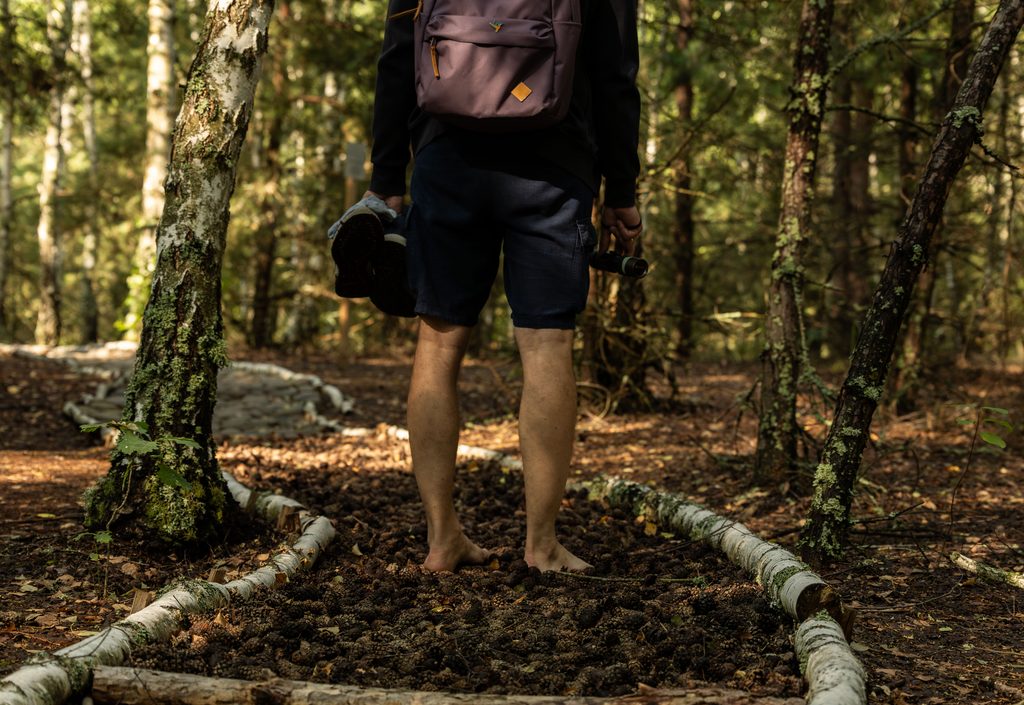
Smell has an unusually intimate relationship with memory and emotion. The olfactory system connects with brain regions including the amygdala and the hippocampal system, structures involved in emotion, associative learning and memory.
That may help explain why a smell can sometimes return us to another place with startling immediacy.
There is an evolutionary dimension to this, too.
Olfaction is an ancient sensory system, and long before humans had restaurants, wine cellars or tasting notes, smells carried useful information about the world around us: food, decay, smoke, animals and the environment.
It is tempting to say that the smell of damp earth simply speaks directly to some “primitive” part of our brain. The real neuroscience is more complicated than that.
But perhaps the truth is more interesting anyway.
Our sense of smell is evolutionarily old, closely connected with systems involved in emotion and memory, and extraordinarily capable of linking the present with things we have experienced before.
You don’t have to identify geosmin, dimethyl sulfide or 2,4-dithiapentane as you walk through the woods.
Your brain doesn’t need their names.
It simply knows that it has smelled something before.
And years later, when a glass of mature wine gives us a fleeting impression of damp leaves, mushrooms, earth and truffle, perhaps for a moment we find ourselves back in that forest.
The molecules are only part of the experience.
The rest is memory.
From the Forest Floor to the Wine Glass
Perhaps this is also why truffles and wine seem such natural companions.
A truffle itself belongs to this underground world. Truffles are the fruiting bodies of fungi that develop beneath the soil, associated with the roots of particular host trees.
Their powerful aroma is part of the extraordinary biology of an organism that spends its fruiting life hidden underground.
For us, however, those aromas have accumulated completely different associations.
Autumn. Rarity. Restaurants. Celebration. Luxury.
And increasingly, apparently, burgers and chips.
Yet put a fresh truffle beside a mature wine and something much subtler can happen.
A wine carrying its own suggestions of mushroom, dried leaves, undergrowth or truffle can echo some of the aromatic world of the food without simply copying it.
Piedmont provides the irresistible example.

This is the landscape of both the famous white truffle of Alba and Nebbiolo-based wines such as Barolo and Barbaresco. The relationship between the region’s truffles and wines has consequently become one of autumn’s great gastronomic traditions.
But pairing wine with fresh truffle isn’t quite as simple as finding a wine that also smells “truffly”. The other ingredients on the plate — butter, egg, pasta, cheese, meat — matter enormously, as does the delicacy and intensity of the particular truffle.
If you’re planning to enjoy the real thing this season, our guide to Piedmont truffle season and how fresh truffles change the wine pairing explores that question in much more detail.
Perhaps We Never Taste With the Tongue Alone
So, does everything really taste better with truffle?
Probably not.
But truffles reveal something wonderful about the way we experience food and wine.
Flavour doesn’t exist on the tongue alone.
What we experience when we eat involves taste and smell, but also texture, temperature and other sensory information. Retronasal olfaction — the aromas reaching our nose from inside the mouth — is particularly important to the experience we casually describe as “taste”.
And all of this is interpreted by a brain carrying a lifetime of memories and associations.
That is why aroma can transform a simple potato.
It is why an underground fungus can become one of the world’s great luxuries.
It is why a glass of mature wine can suddenly remind us of mushrooms, autumn leaves or a damp woodland.
And it is why the word truffle in a wine tasting note can describe something that was never anywhere near the wine.
Perhaps truffle is simply a particularly beautiful reminder that when we raise a glass or lift a fork, we taste with far more than our tongue.
Further reading
For the science behind the article, see the review “An Overview on Truffle Aroma and Main Volatile Compounds”, which examines more than 200 volatile compounds identified across truffle species; research in the Journal of Agricultural and Food Chemistry on dimethyl sulfide and thiols in the ageing bouquet of red Bordeaux wines; a Food Chemistry study examining geosmin as an earthy off-flavour in wine; and a scientific review of orthonasal and retronasal flavour perception.
For this year’s seasonal context, the 2026 International Alba White Truffle Fair runs from 10 October to 6 December, while Burger King Korea announced its five-product autumn truffle menu on 16 September 2026.