
You are standing in the fruit aisle looking at a box of perfectly plump red grapes when the thought occurs:
Could I actually turn these into wine?
The short answer is yes.
Supermarket grapes contain sugar, juice and naturally occurring acids — everything needed to provide the basic raw material for fermentation. Add the right wine yeast, give it suitable conditions, and those innocent-looking table grapes can indeed become wine.
But there is a second question:
Will it be good wine?
That is where things become much more interesting.
Can Table Grapes Really Be Made Into Wine?
Yes. There is nothing magical about a “wine grape” that allows it to ferment while a table grape cannot.
During alcoholic fermentation, yeast consumes grape sugars and converts them primarily into alcohol and carbon dioxide. Penn State Extension describes this same basic process in commercial winemaking.
If a supermarket grape contains enough fermentable sugar, its juice can therefore become alcoholic.
In fact, the boundary between table grapes and wine grapes is not as rigid as we sometimes imagine. Some grape varieties can be eaten fresh, made into juice or used for wine.
The important differences lie in things such as sugar concentration, acidity, skins, seeds and flavour.
If you want to explore those differences first, have a look at our guide to Table Grapes vs Wine Grapes.
So the real problem isn’t whether supermarket grapes can ferment.
It is whether their particular combination of sugar, acidity, flavour, skin and tannin will make a balanced wine.
Supermarket Grapes Were Bred for Eating, Not Drinking
Think about what you want when you buy a bunch of grapes.
You probably look for large, firm berries with:
- crisp flesh
- sweet flavour
- thin or pleasant skins
- few or no seeds
- attractive, evenly coloured bunches
Those are exactly the traits table-grape breeders and growers have concentrated on.
Wine grapes have different priorities.
Wine grapes generally contain more sugar and acid, a greater proportion of skin to pulp, and often more seeds than table grapes.
That doesn’t necessarily make them nicer to eat.
But it can make them considerably more interesting once they are crushed and fermented.
And once you start thinking about making wine from fresh grapes, another question soon follows: how many grapes would you actually need? We looked at that in detail in How Many Grapes Do You Need to Make a Bottle of Wine?.

The First Problem: Sugar
Alcohol comes from sugar.
The more fermentable sugar grape juice contains, the greater its potential alcohol content.
Wine grapes are therefore normally harvested according to measurements such as Brix, which gives winemakers an indication of the concentration of dissolved solids — predominantly sugars — in the juice.
Wine grapes intended for fermentation are often harvested at considerably higher sugar levels than fruit destined simply for fresh eating, although the exact figure depends on the variety, region and style of wine.
Table grapes are different.
They only need to taste pleasantly sweet when eaten.
Some table varieties can certainly achieve quite high sugar levels, so it would be wrong to say that all table grapes are low in sugar.
However, a random punnet from the supermarket gives you very little information about its sugar concentration.
That means a home winemaker would ideally measure the juice with a hydrometer or refractometer rather than simply guessing.
The Second Problem: Acidity
Sugar is only one part of good wine.
Without sufficient acidity, wine can taste flat, dull or overly soft.
Grapes naturally become sweeter and less acidic as they ripen.
For table grapes, growers are looking for a pleasant balance for fresh eating.
Winemakers, however, have to think about what that balance will taste like after fermentation has removed much of the sugar.
A grape that tastes beautifully sweet and mild in your mouth may therefore produce a wine that feels surprisingly bland once the sweetness has disappeared.
This is one reason winemakers measure not only sugar but also factors such as pH and titratable acidity before fermentation.
Then There Are the Skins
Here supermarket grapes are at another disadvantage — particularly if you are hoping to make red wine.
Much of a red wine’s colour, tannin and structure comes from compounds extracted from grape skins and seeds during fermentation.
Table grapes are generally selected for pleasant eating qualities such as thin skins, crisp flesh and seedlessness. Wine grapes commonly have thicker skins and a greater ratio of skin to juice.
That difference matters.
Imagine crushing ten large table grapes and ten small wine grapes.
The large grapes give you plenty of pale, juicy flesh.
The smaller wine grapes give you proportionally much more skin.
For someone wanting a snack, the first option is probably preferable.
For someone trying to extract colour, flavour and tannin into a wine, the second can be far more useful.
Interestingly, the vine itself gives us more than just grapes. The leaves have also had a long history of traditional use, particularly red vine leaves. You can read more about that in Red Vine Leaves: Why Autumn’s Vineyard Leaves Have Long Been Used for Heavy Legs.
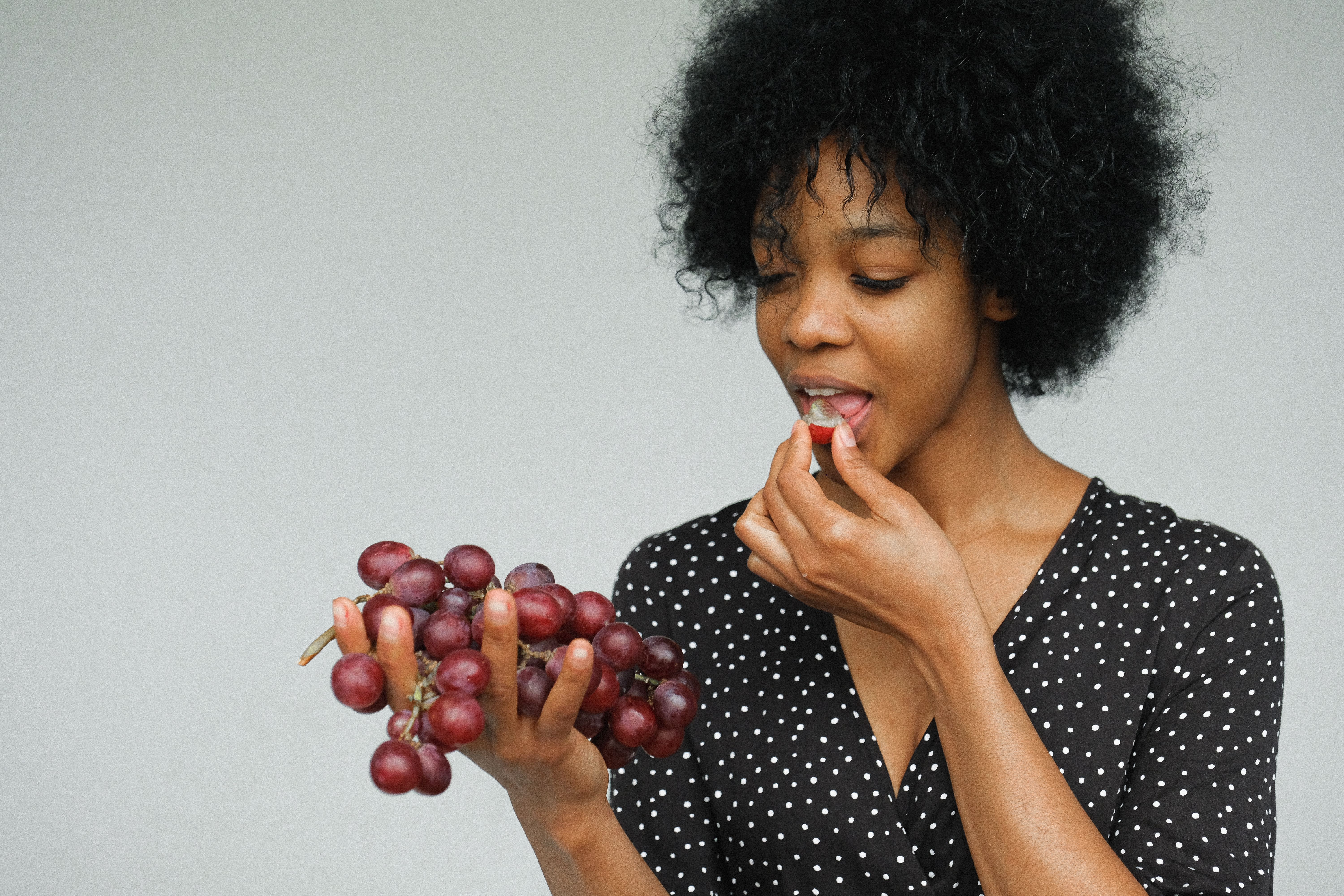
Could You Make Red Wine From Red Supermarket Grapes?
Yes — but don’t expect the deep colour of Cabernet Sauvignon simply because the grapes look dark purple.
Red wine gets much of its colour from prolonged contact between juice and skins.
Even many dark wine grapes have surprisingly pale juice inside.
Supermarket red or black table grapes can provide some colour during fermentation, but because their skins and phenolic composition were not selected specifically for winemaking, the finished result may be lighter in colour and structure than expected.
You may end up with something closer to a light red or rosé-style homemade wine.
And there is nothing necessarily wrong with that.
What About Green Supermarket Grapes?
Green table grapes can also be fermented.
In some ways, they might actually be a simpler experiment because you are not relying heavily on skin extraction to create colour and tannin.
Crush and press them and you essentially have a sweet grape juice that can form the basis of a white-style wine.
Again, however, the main question will be whether the sugar, acidity and flavour are balanced enough to remain interesting after fermentation.
A grape that tastes wonderfully sweet before fermentation may taste surprisingly neutral when the sugar is gone.
Would Seedless Grapes Be a Problem?
No.
Yeast does not care whether your grapes have seeds.
Seedless grapes can ferment perfectly well.
The difference is more about what seeds can contribute to a wine.
Grape seeds contain tannins and other phenolic compounds. Because most supermarket table grapes are seedless, one potential source of tannin and structure is simply absent.
For a light homemade white wine, that might hardly matter.
For a powerful red wine, it becomes much more noticeable.
Would You Need to Add Sugar?
Possibly — but don’t automatically reach for the sugar bowl.
The sensible approach is to measure first.
If the grapes already contain plenty of sugar, adding more could simply produce an unnecessarily alcoholic wine or leave fermentation struggling to finish.
A hydrometer allows a home winemaker to estimate the specific gravity of the juice and therefore its approximate potential alcohol.
Only then can you decide whether any adjustment is appropriate.
The same applies to acidity.
Good winemaking is less about following a recipe blindly and more about understanding what is already present in the fruit.
Could You Just Let Supermarket Grapes Ferment Naturally?
Grapes naturally carry microorganisms on their surfaces, including yeasts, so spontaneous fermentation is possible.
But “possible” and “predictable” aren’t the same thing.
Commercial and careful home winemakers commonly use selected wine yeasts because they provide much greater control over fermentation.
Clean equipment matters too.
If you are going to experiment with supermarket grapes, using proper winemaking equipment and yeast gives your fruit a much better chance of becoming wine rather than an interesting jar of spoiled grape juice.
Could You Make Something Like Ice Wine?
Now things become more adventurous.
Traditional ice wine is made from grapes that freeze naturally on the vine, concentrating the juice before pressing.
Supermarket grapes are obviously not harvested that way, so freezing a bunch at home would not make a traditional ice wine.
But home winemakers can still experiment with freezing grapes to concentrate sugars and flavours.
If that idea appeals to you, we have a separate guide on Making Homemade Ice Wine From Your Mini Vineyard.
It is a very different project from simply fermenting supermarket grapes, but both experiments are useful reminders of just how dramatically the character of a grape can change depending on how it is treated before fermentation.
Will Supermarket-Grape Wine Taste Like Normal Wine?
Possibly — but probably not quite.
The result could be perfectly drinkable, especially if the grapes themselves are flavourful and the sugar and acidity happen to fall into a useful range.
But don’t expect a supermarket bunch to behave like Pinot Noir, Riesling or Cabernet Sauvignon.
Those wine varieties have been selected precisely because fermentation transforms their grapes into something interesting.
A supermarket grape has been selected because the grape itself is interesting to eat.
That distinction becomes more obvious when the sugar disappears.
Fermentation can reveal characteristics you barely noticed in the fresh fruit — or reveal that there wasn’t much flavour underneath the sweetness in the first place.
Could Supermarket Grapes Make Surprisingly Good Wine?
Absolutely.
And this may be the most fun reason to try it.
“Table grape” does not automatically mean “bad wine grape.”
Some table-grape varieties are highly aromatic, and certain grapes have historically been used for more than one purpose.
Even among grapes bred primarily for fresh eating, sugar levels and flavour characteristics vary considerably.
So instead of asking:
“Can table grapes make wine?”
perhaps the better question is:
“What kind of wine will these particular table grapes make?”
You won’t really know until you ferment them.
Is It Worth Trying?
If your goal is to reproduce a commercial bottle of Sauvignon Blanc or Merlot, probably not.
Buying proper wine grapes or high-quality wine-grape juice would give you much more predictable results.
But if your goal is curiosity?
Then supermarket grapes might be one of the most accessible winemaking experiments available.
A bunch of grapes that normally disappears into a fruit bowl can teach you surprisingly much about sugar, acidity, tannins and fermentation.
You may discover why wine grapes evolved — through centuries of selection — into something very different from the grapes we like to eat.
Or perhaps your supermarket experiment will produce something unexpectedly delicious.
Either way, you will have answered the question for yourself:
Yes, you really can make wine from supermarket grapes.
The more interesting question is what that wine will become.