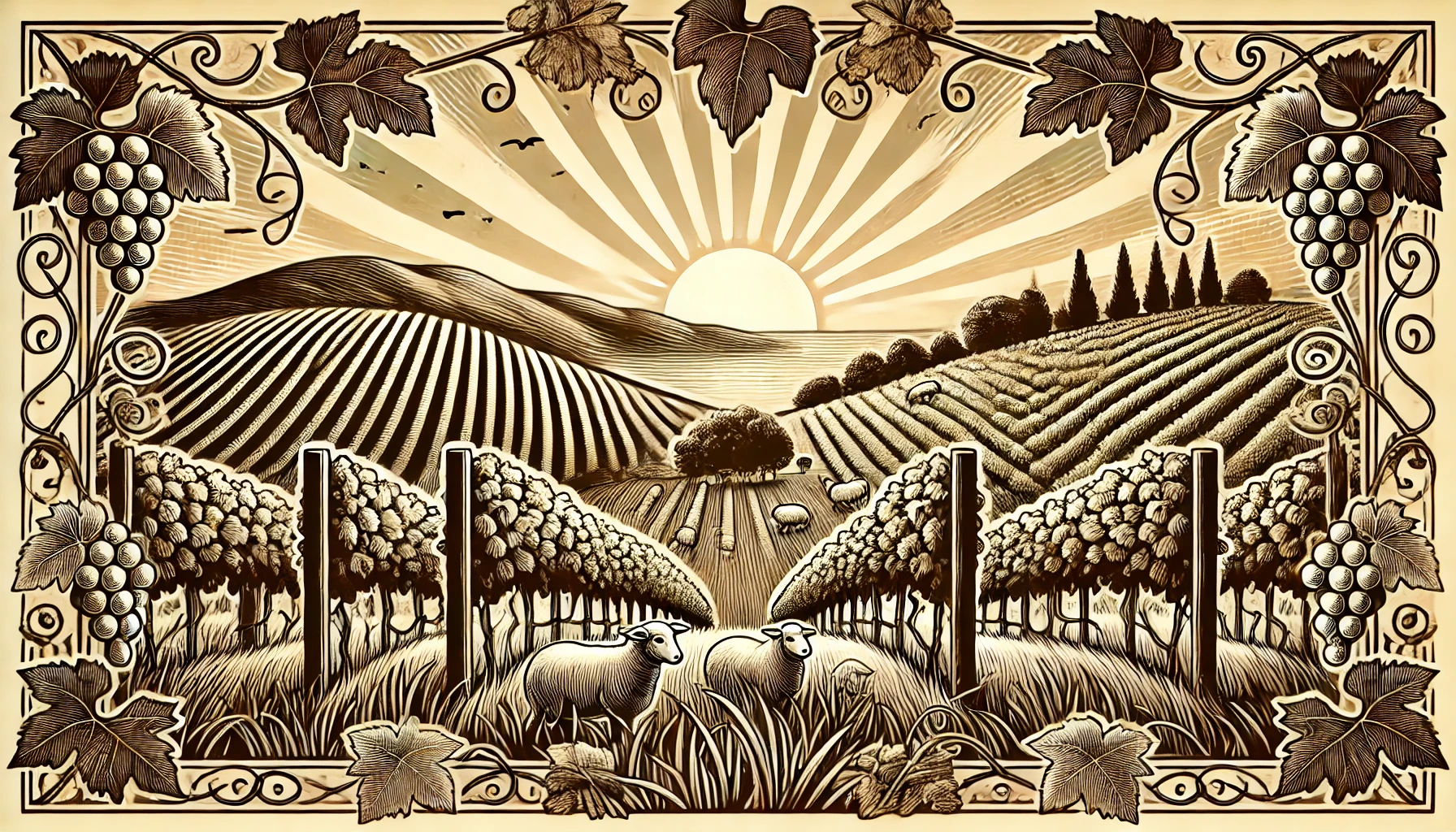
A biodynamic vineyard takes organic farming a step further. It follows principles established by Austrian philosopher Rudolf Steiner in the 1920s. Biodynamic farming focuses on creating a balanced ecosystem in the vineyard. It goes beyond avoiding chemicals and emphasizes harmony with natural cycles. Farmers use compost and manure to enrich the soil. They also plant cover crops to increase biodiversity.
Biodynamic vineyards follow a lunar calendar for tasks like pruning and harvesting. This approach sees the vineyard as a living organism, where everything is connected. Farmers often use preparations made from plants and minerals to boost plant health. For example, they might spray fermented herbal teas to strengthen the vines.
One key element of biodynamic farming is the use of animals. Animals like sheep may graze in the vineyard, helping to manage weeds naturally. Beekeeping is also common, encouraging pollination and fostering a healthy environment.
Biodynamic wine certification is available through organizations like Demeter. Wines made from biodynamic vineyards are said to express a truer sense of terroir. The aim is to work with nature, not against it, to produce high-quality wine with minimal impact on the environment.
Curious about more wine terms and insights? Visit our Wine Wiki section and explore the basic wine terms for expert definitions and tips!
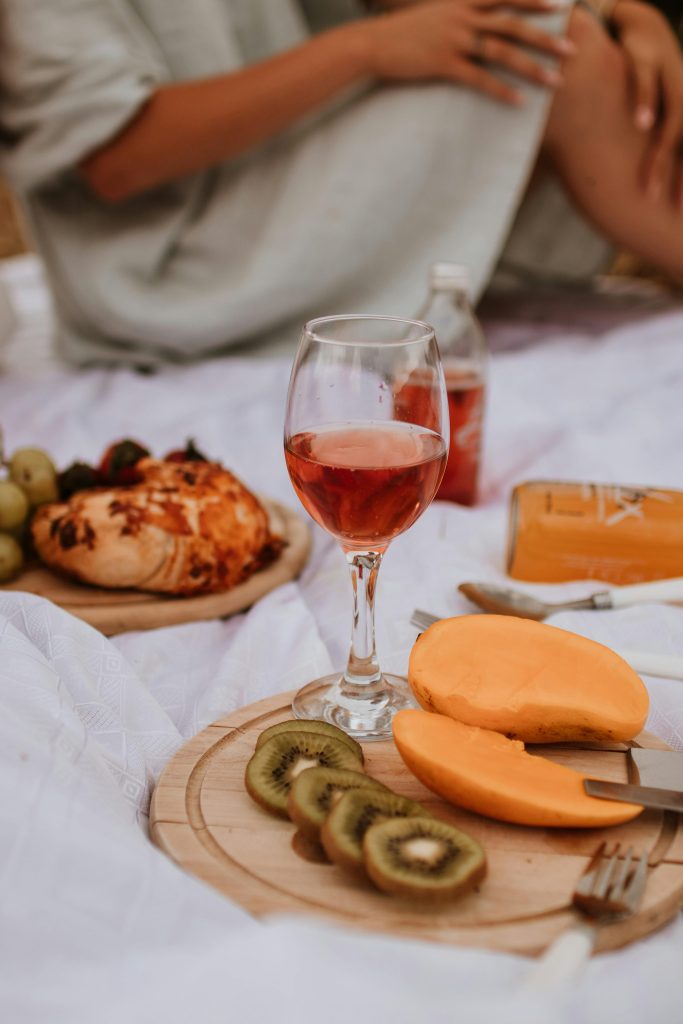
a group of friends in their late twenties gathered around a picnic blanket. Instead of the usual beer cans, they’re sipping wine from eco-friendly bottles. Not just any wine, but sustainable wine. This scene isn’t a rarity anymore. Young adults are redefining the wine industry, one sustainable sip at a time.
The Rise of Sustainable Wines Among the Youth
Wine has always been a symbol of culture and tradition. But now, it’s also becoming a symbol of sustainability and innovation, especially for younger generations. Millennials and Gen Z are not just drinking wine; they’re drinking wine that aligns with their values.
Why the Shift?
Young people today are more environmentally conscious than ever before. Climate change, carbon footprints, and sustainable living aren’t just buzzwords; they’re guiding principles. When it comes to wine, this means choosing bottles that are not only delicious but also kind to the planet.
A survey by Wine Intelligence found that 71% of regular wine drinkers aged 21-39 are willing to pay more for sustainably produced wine. That’s a significant number, showing a clear preference for eco-friendly options.
What Makes a Wine Sustainable?
Before we dive deeper, let’s unravel what “sustainable wine” actually means. It’s more than just a label; it’s a philosophy that encompasses various practices aimed at reducing environmental impact.
Organic Wines
Organic wines are made from grapes grown without synthetic pesticides or fertilizers. This means healthier soil, cleaner water, and a better environment overall.
Biodynamic Wines
Biodynamic farming takes organic practices a step further. It involves a holistic approach, treating the vineyard as a self-sustaining ecosystem. Farmers follow lunar cycles and use natural preparations to enhance soil fertility.
Natural Wines
Natural wines are made with minimal intervention. Winemakers use native yeasts for fermentation and avoid additives. The result is a wine that’s as close to the grape as you can get.
Sustainable Certifications
Various certifications ensure that wineries follow sustainable practices. These include the Certified California Sustainable Winegrowing and the LIVE Certified Sustainable Wine programs.
Innovative Trends Fueling the Movement
So, what innovative trends are young people embracing in the sustainable wine scene?
Alternative Packaging
Gone are the days when wine only came in heavy glass bottles. Young consumers are open to cans, boxes, and even paper bottles.
Canned Wines: Easy to transport and perfect for outdoor activities. Plus, aluminum cans are highly recyclable.
Boxed Wines: Less packaging waste and a lower carbon footprint during transportation.
Paper Bottles: Companies like Frugalpac are introducing paper wine bottles that are recyclable and significantly lighter than glass.
Low-Intervention Winemaking
There’s a growing appreciation for wines made with minimal technological intervention.
No Added Sulfites: While sulfites are a natural byproduct of fermentation, many winemakers add more to preserve the wine. Low-intervention wines avoid this.
Wild Fermentation: Using naturally occurring yeasts adds unique flavors and reflects the terroir more authentically.
Tech and Transparency
Apps like Vivino allow users to scan wine labels and get detailed information, including sustainability practices. This transparency empowers young consumers to make informed choices.
The Social Media Effect
Social media plays a significant role in spreading the word about sustainable wines.
Influencer Partnerships: Brands collaborate with eco-conscious influencers to reach a wider audience.
Hashtags and Challenges: Campaigns like #WineWednesday promote sustainable choices.
Virtual Tastings: During the pandemic, virtual wine tastings became popular, often highlighting sustainable wines.
The Economic Impact
Choosing sustainable wines isn’t just good for the planet; it’s also influencing the economy.
Supporting Small Producers: Many sustainable wines come from small, independent wineries.
Job Creation: Sustainable practices often require more hands-on work, creating jobs in local communities.
Challenges Ahead
While the trend is growing, there are hurdles.
Higher Costs
Sustainable wines can be pricier due to more labor-intensive practices. However, as demand increases, prices are expected to become more competitive.
Certification Confusion
With multiple certifications and labels, consumers can get overwhelmed. Education is key to helping young buyers make informed choices.
Tips for Young Wine Enthusiasts
If you’re a young adult looking to dive into sustainable wines, here are some tips.
Do Your Research: Use apps and websites to learn about the winery’s practices.
Start Local: Explore sustainable wineries in your region to support local businesses.
Ask Questions: Don’t hesitate to ask your local wine shop for recommendations on sustainable options.
Experiment: Try different types of sustainable wines—organic, biodynamic, natural—to see what you enjoy.
The Future Looks Green
The welcoming of sustainable wines by young people is more than a passing trend; it’s a shift towards a more responsible and conscious way of enjoying one of the world’s oldest beverages.
Winemakers are listening. They’re innovating, adapting, and meeting the demands of a generation that values the planet as much as the pleasures of a good glass of wine.
So next time you’re choosing a bottle, consider going sustainable. Not only will you be treating your taste buds, but you’ll also be making a choice that’s good for the Earth.
Imagine ending each day with a glass of your favorite wine. The rich aroma, the clink of the glass—it’s a simple pleasure many of us cherish. But have you ever wondered how much land is behind that single glass? Let’s uncork this mystery and pour out the facts…
A Sip Starts in the Soil
Every glass of wine begins in a vineyard. The journey from grape to glass is a tale of sun-soaked days, meticulous care, and the magic of fermentation. But how much space does it really take to produce enough wine for one glass a day?
The Daily Glass: Measuring Your Pour
First, let’s define our daily indulgence:
One standard glass of wine is about 150 milliliters.
Over a year, that’s:
150 ml/day × 365 days = 54,750 milliliters, or 54.75 liters per year.
Now, let’s explore how much vineyard real estate is needed to produce those 54.75 liters.
The Yield of the Vine
Grape yields vary depending on grape variety, climate, and farming practices. However, we can use average figures to estimate.
Average wine yield: A vineyard can produce about 6,000 liters of wine per hectare annually.
Breaking it down:
1 hectare = 10,000 square meters.
6,000 liters/hectare translates to 0.6 liters per square meter.
Calculating Your Personal Vineyard
Now, let’s figure out how much land you need for your yearly wine supply.
Your annual consumption: 54.75 liters.
Land needed: 54.75 liters ÷ 0.6 liters per square meter = 91.25 square meters.
So, to enjoy one glass of wine every day for a year, you’d need approximately 91 square meters of vineyard. That’s about the size of a small apartment or a spacious backyard garden!
Sharing the Joy: Wine for Two and Guests
But what if you’re not the only one loving that daily glass?
Wine for You and Your Spouse
Double the consumption: 54.75 liters × 2 = 109.5 liters per year.
Land needed: 109.5 liters ÷ 0.6 liters per square meter = 182.5 square meters.
Hosting Weekend Guests
Let’s say you have friends over on weekends, and together you enjoy a bottle.
One bottle (750 ml) per weekend: 750 ml × 52 weeks = 39 liters per year.
Total annual consumption including guests: 109.5 liters + 39 liters = 148.5 liters.
Land needed: 148.5 liters ÷ 0.6 liters per square meter = 247.5 square meters.
So, to accommodate your own glass, your spouse’s, and weekend gatherings, you’d need approximately 250 square meters of vineyard. That’s like half a basketball court dedicated to your personal wine supply!
Visualizing the Expanded Vineyard
Picture a plot of land roughly 16 meters by 16 meters. In that expanded space, more rows of grapevines flourish, ensuring there’s enough wine to share with loved ones all year round.
From Vine to Wine: The Journey
Understanding the land is just part of the story. Let’s walk through the stages that transform grapes into that lovely liquid.
1. Cultivation
Your 250 square meters of vineyard require care:
Pruning: Ensuring the vines grow properly.
Irrigation: Providing water, though many vineyards rely on natural rainfall.
Soil Management: Keeping the soil healthy with nutrients.
2. Harvesting
Timeframe: Typically in late summer or early autumn.
Method: Can be hand-picked or machine-harvested.
Yield: Your plot would produce enough grapes to make 148.5 liters of wine.
3. Fermentation and Production
Crushing and Pressing: Extracting juice from the grapes.
Fermentation: Yeast converts sugars into alcohol.
Aging: Wine matures in barrels or tanks, developing its flavor.
4. Bottling
Packaging: Your annual supply fills about 198 bottles (assuming standard 750 ml bottles).
Wine Storage: Proper conditions ensure the wine maintains its quality.
The Global Perspective
Now, let’s widen the lens. If everyone who enjoys a daily glass with their spouse and occasional guests needed their own 250 square meters, how much land would that be?
Assuming 25 million households have similar consumption.
Total land needed: 25 million × 250 square meters = 6,250 square kilometers.
That’s an area larger than the state of Delaware dedicated just to personal wine consumption!
The Sustainability Factor
Wine production isn’t just about land—it’s also about sustainable practices.
Water Usage
Grapevines are relatively drought-tolerant but still require water.
Efficient irrigation and dry farming methods reduce water use.
Chemical Use
Organic and biodynamic farming avoid synthetic chemicals, promoting healthier ecosystems.
Carbon Footprint
Local consumption reduces transportation emissions.
Renewable energy in wineries lowers environmental impact.
Happy to Make a Choice
Your daily glass represents not just land but also choices about sustainability and environmental impact.
Supporting Sustainable Wineries: Look for certifications or practices that emphasize eco-friendliness.
Exploring Local Wines: Reduces transportation impact and supports local economies.
Mindful Consumption: Enjoying wine responsibly enhances appreciation for the effort behind each bottle.
Fun Facts to Sip On
Old Vines, Rich Wines: Older grapevines often produce less fruit but with more concentrated flavors.
Terroir Matters: The unique combination of soil, climate, and terrain gives wine its distinctive character.
A Global Affair: Wine grapes are grown on every continent except Antarctica.
Bringing It Home
So, next time you pour that glass, take a moment to appreciate the 250 square meters of vineyard that made it possible. Envision the vines basking in the sun, the careful hands that tended them, and the journey from earth to bottle.
The Investment Angle
If you’re a real estate enthusiast, consider this:
Owning a Vineyard Plot: Investing in vineyard land can be both a passion project and a business opportunity.
Wine Real Estate: Vineyard properties combine agricultural and residential real estate, often in beautiful locales.
Conclusion: A Toast to the Land
Wine is more than a beverage; it’s a connection to the land and a product of nature’s artistry. Understanding the space required to produce your daily glass—and that of your loved ones—adds depth to the experience.
Remember, every glass tells a story—one rooted in the soil and brought to life by those who cultivate it. Therefore, please share that story with family and friends! 😉
Wine is wonderful. It’s rich, complex, and adds a touch of elegance to any gathering. But let’s face it—sometimes, elegance slips through our fingers, literally, and a glass of red splashes onto someone’s favorite shirt. No need to panic. Wine spills happen to the best of us, and handling them with grace makes all the difference. Here’s your go-to guide for keeping your cool when the unexpected happens.
Stay Cool: The First Rule of Wine Etiquette
Picture this: you’re hosting a fabulous dinner party, everyone’s enjoying themselves, and then it happens. Someone knocks over a glass of Pinot Noir. Red liquid spreads across your pristine white tablecloth. What’s the first thing you do? Breathe. Staying calm is your best move. A quick, calm reaction keeps the mood light. No one enjoys a host who overreacts, especially when there’s an easy solution around the corner.
A spilled drink doesn’t mean the night is ruined. It’s just a moment—a blip in an otherwise lovely evening. Make a joke or tell a funny story about the last time this happened. Shift the focus away from the spill and back onto the fun. And remember, there are simple ways to handle these mishaps.
Great hosts prepare for anything, including a wine spill or two. You don’t need a full cleaning kit at the ready, but a few key items can save the day. Here’s what to keep nearby:
Clean Cloth Napkins: They’re great for dabbing spills without pushing the liquid further into the fabric.
Salt or Baking Soda: These work wonders for soaking up fresh spills on carpets or fabric.
A Stain Guide: Having a quick reference on hand for how to handle different stains can make you look like a pro. Keep a printed copy in your kitchen drawer or save a link on your phone.
Speaking of helpful resources, if a spill gets out of hand, it’s good to know how to handle the stains. For those stubborn red wine spots, check out these expert tips on how to remove wine stains. Trust me, your future self will thank you.
Quick Fixes for Common Wine Spills
Now that you’re prepared, let’s talk about handling the most common spill situations. Whether it’s red wine on your new carpet or a splash on your favorite sweater, these tips will help keep things under control.
Red Wine on Fabric: Start by gently blotting the area with a clean cloth to absorb as much liquid as possible. Never rub! Rubbing only pushes the wine deeper into the fibers. Once you’ve blotted the excess, sprinkle some salt or baking soda on the stain. Let it sit for a few minutes, then rinse with cold water. It might not be perfect, but it will buy you time before taking more serious action.
Wine on Carpet: Blot the area with a cloth and follow up with cold water. Don’t soak it; just enough to dilute the wine. Then, sprinkle baking soda or salt over the area and let it dry before vacuuming. It’s not a perfect fix, but it helps keep the stain from setting until you can deal with it properly.
Spills on Upholstery: If you have a wine spill on your sofa, act fast. Blot the area and apply a mixture of mild dish soap and water with a sponge. Rinse with a little cold water and blot dry. For more stubborn stains, a professional cleaner can be a lifesaver.
For more in-depth advice on tackling those tricky stains, don’t forget to visit this guide on removing wine stains. It’s full of practical tips that make tough stains seem manageable.
Keep the Party Going: Redirecting the Focus
Now that you’ve handled the spill, what next? It’s time to get back to enjoying the evening. A well-timed joke or a change of subject can steer the conversation away from the mess and back to the fun. Here are a few ways to keep the mood light:
Share a light-hearted story about a time you spilled something (maybe even a bit of red wine yourself).
Shift focus to a new wine you’re excited to share or ask your guests about their favorite wines.
Use the spill as an opportunity to showcase your hosting skills. Impress your guests with your quick thinking and calm demeanor.
A little humor and confidence go a long way in turning a potential embarrassment into a funny memory.
Wine Stains: Prevention and Clean-Up Tips
While we’re on the subject, a few proactive steps can help you prevent spills in the first place. Here’s how to keep those spills to a minimum:
Use Smaller Glasses: Serving wine in smaller glasses reduces the risk of big spills. Plus, it gives guests the chance to try more varieties!
Don’t Overfill: Filling glasses only halfway makes spills less likely, especially when guests are mingling or moving around.
Place Glasses Strategically: Avoid placing glasses too close to the edge of tables or near areas where they can be easily knocked over.
But let’s be real—no matter how careful you are, accidents will still happen. That’s why it’s good to know how to remove stains when they do. For a detailed step-by-step guide, take a look at these tips for removing wine stains. They’ll help you get back to enjoying your evening in no time.
Conclusion: Toasting to Fun, Spills and All
Wine spills are just part of the experience. They’re a reminder that, no matter how sophisticated we try to be, life gets a little messy sometimes. And that’s okay. With a few quick moves and a sense of humor, you can keep the night rolling, no matter what hits the tablecloth. Just remember to stay calm, be prepared, and enjoy the moment. After all, a little spilled wine can’t compete with the joy of great friends, great stories, and a glass of something special.
So, next time a glass tips over, don’t worry—make the best out of it. And if you need a little help with those stubborn stains, you know where to look.
If you’re a wine lover who craves a curated selection, exclusive access to hidden gems, and a bit of luxury in your glass, then you’ve probably heard of Waitrose Cellar Deliveries. This isn’t just another online wine shop—it’s a treasure trove for anyone from casual sippers to seasoned connoisseurs. But what makes Waitrose Cellar special enough to deserve a spot in your bookmarks? Let’s look into the best features that make this service shine.
1. Curated Wine Selection: A World of Wine in Your Browser
Let’s start with the heart of any good wine shop: the selection. Waitrose Cellar is known for offering a wide range of wines from across the globe. From the rolling vineyards of Bordeaux and Burgundy to the sunny hills of California, they have you covered. They even cater to those looking for something off the beaten path, with a special focus on biodynamic and organic options. And if you’re after exclusivity, their range includes special vintages that can’t be found in every supermarket (Club Oenologique). Whether you’re a fan of a bold red or a zesty white, there’s a good chance you’ll find your next favorite bottle here.
2. Deals and Discounts: Because Quality Doesn’t Always Mean Expensive
Yes, Waitrose may have a reputation for being a bit on the posh side, but they know how to make a good deal too! One of the best things about shopping at Waitrose Cellar is the regular promotions they run. You’ll often find discounts of up to 25% on selected wines, perfect for those times when you want to stock up without feeling like your bank account is about to stage a protest.
Their mix-and-match deals also make it easy to try different bottles without committing to a full case, which is a huge win for those of us who like to sample widely before settling on a favorite.
3. Expert Advice: Not Just a Transaction, It’s an Experience
Imagine walking into a wine shop where the staff actually knows their stuff. At Waitrose Cellar, that experience translates to their online customer service. They pride themselves on having knowledgeable staff ready to help with recommendations. If you’re looking for the perfect pairing for your next dinner party or just need some guidance in choosing between a Rioja and a Chianti, their experts have your back. It’s like having a sommelier in your pocket—without the hefty consulting fee.
4. Low and No-Alcohol Options: For the Mindful Sippers
Not every occasion calls for alcohol, and that’s where Waitrose Cellar’s diverse selection of low and no-alcohol wines comes into play. With an increasing number of people opting for lighter drinking options, Waitrose Cellar has kept up with the trend. They offer a range of alcohol-free wines that still bring the flavor, minus the buzz. This is perfect for designated drivers, those cutting back, or anyone who just wants a tasty drink that won’t knock them off their feet. It’s a small but thoughtful addition that makes Waitrose Cellar stand out from many competitors.
5. Exclusive Limited Editions: The Thrill of Rarity
Now, who doesn’t love the idea of getting their hands on a bottle that not everyone else has? With Waitrose Cellar’s “On the QT” range, they give you access to limited-edition wines that are only available for a short time. These special releases often come from small, boutique producers, offering a chance to taste something truly unique. For wine enthusiasts who love the thrill of discovering something new, this is a golden opportunity to add a rare find to your collection.
6. Tailored Wine Gifts and Cases: Perfect Presents, No Guesswork
Looking for a gift that says, “I know you love wine, and I didn’t just grab the first bottle I saw”? Waitrose Cellar’s wine gift sets are here to save the day. From beautifully packaged single bottles to curated cases of reds, whites, and bubbly, they make gift-giving a breeze. It’s a particularly great option around the holidays, when finding the perfect present can feel like a Herculean task. Plus, their gift sets often come in luxurious packaging, adding that little extra touch that makes a difference.
7. Delivery That Doesn’t Keep You Waiting
We’ve all been there—ordering a bottle for the weekend only to realize it’ll arrive sometime next week. Thankfully, Waitrose Cellar’s delivery service has you covered with quick and reliable delivery slots. They even allow you to schedule deliveries, so you don’t have to worry about missing your wine shipment. This level of convenience makes Waitrose Cellar a standout choice for those who want their wine delivered on time, every time.
8. A Wide Range of Prices: From Budget-Friendly to Premium Picks
It’s not all about high-end bottles and fancy labels. While Waitrose Cellar certainly caters to those with a taste for luxury, they also offer plenty of affordable options. Their range of wines includes something for every budget, whether you’re looking for a Tuesday night tipple or a special occasion splurge. This balance means you can explore a variety of flavors without feeling like you need to refinance your house.
Final Thoughts: Why Waitrose Cellar Deserves a Spot on Your Radar
At the end of the day, Waitrose Ltd offers more than just a place to buy wine. It’s a thoughtfully curated experience that caters to a wide range of tastes and preferences. With special features like expert advice, exclusive releases, and a commitment to quality, they’ve managed to create an online space that feels personal, even though it’s digital.
So, whether you’re a dedicated Waitrose shopper or someone new to their offerings, there’s a lot to love about Waitrose Cellar. The next time you’re in the market for a bottle (or six), why not see what they have to offer? With the right mix of quality and convenience, it might just become your go-to for all things wine.
In the heart of beautiful Switzerland, one company stands out for its dedication to bringing the warmth and richness of Spanish wines to Swiss wine lovers—SPANIENWEINonline.ch . This is not just a story about a business; it’s a story of a passion that started decades ago in a dusty cellar, grew through French vineyards, and found a true home in the sun-soaked vineyards of Spain. Here, wine isn’t just a drink; it’s a piece of history, a memory, a moment to cherish.
A Nostalgic Beginning
The story starts long before the company itself. It began with a young boy, tasked by his father with fetching a wine bottle from the cellar. Each time, he’d carry up a dusty bottle, feeling the weight of its history. He’d marvel at the old, yellowed labels, wondering about the stories behind them. These bottles held more than wine—they held a sense of nostalgia, a connection to the past. While his father and guests enjoyed the contents, the boy admired the beauty of the bottle itself.
These small moments planted the seeds of a lifelong love for wine. Later, as a teenager, he encouraged his father to subscribe to a wine club, eager to explore new tastes. He started keeping notes on the wines, with simple descriptions like “good” or “very good.” The fascination was already taking root, and with each bottle, his understanding of wine deepened.
A Journey Through Bordeaux
When he turned 21, life took him to Paris. There, on Boulevard Montparnasse, he found himself drawn to a local wine shop. It was here that he first immersed himself in the world of Bordeaux wines. Yet, budget constraints limited him to the more modest Cru Bourgeois. These young, unrefined wines left him a bit disappointed. “Is this really Bordeaux?” he wondered.
The shopkeeper offered advice that would stay with him: “Try different wines. Set aside those that you think might age well.” This simple suggestion sparked a curiosity for wines that evolve over time. It marked the beginning of a lifelong search for aged, mature wines—wines that hold stories within them, just like those old bottles in his father’s cellar.
A Return to Switzerland and a New Discovery
Back in Switzerland, nearing thirty, he found a new way to explore his passion: wine auctions. Here, he could find mature wines that had already aged to perfection. Armed with Robert Parker‘s thick red guide, he memorized the names of famous Chateaux and ventured into auctions, piecing together mixed lots of vintage wines. The best bottles, those sought after by London and Moscow buyers, slipped through his grasp. But that didn’t matter. He discovered the thrill of tasting mature wines, wines that told stories from decades past.
These mixed lots brought a range of experiences—from the occasional disappointment to the rare and treasured “wow” moment. It wasn’t just about the wine; it was about the journey of discovery, the unexpected joy of finding a hidden gem.
The Shift to Spanish Wines
In 2008, he began ordering wines online, and soon, he met three partners who would open up a whole new world to him: Spanish wines. Together, they explored the rich diversity of Spain’s vineyards. Over time, his partners moved on to new ventures, but he continued with the same passion that had driven him since those early days. In 2009, he founded his own wine shop, SPANIENWEINonline.ch, bringing the best Spanish wines to Swiss customers.
Bordeaux wines still held a special place in his heart. He kept a few in his cellar, savoring them slowly, bottle by bottle. But the new passion for Spanish wines took center stage. Spain offered something different—vibrant reds, complex whites, and lesser-known gems. It became clear that Spanish wines weren’t just a passing interest; they were the future of his business.
“Wertschätzung”: The Art of Appreciation
At SPANIENWEINonline.ch, “Wertschätzung”—or appreciation—is more than simply a word. It’s a way of being and about appreciating the story behind every bottle rather than merely selling it. Holding an aged wine in your hands, you feel the weight of the years it has spent maturing, the craftsmanship of the winemaker, and the unique qualities of the vintage. This appreciation connects each bottle to a moment in time, to memories of sunny vineyards and cool cellars.
The company’s focus on mature Spanish wines offers customers a chance to experience this appreciation. These wines invite you to slow down, savor each sip, and discover the layers of flavor that come with age. The goal is to share this sense of awe with every customer, helping them find their own “wow” moments in each bottle.
Spanish Excellence for Swiss Wine Lovers
Each wine in the collection has been carefully chosen. They know that each Spanish wine offers a specific flavor profile. Every wine has something special, whether it’s a robust Rioja, a silky Tempranillo, or a lesser-known varietal. Therefore, clients may feel the depth and complexity that only aging can bring.
Delivering this excellence to Swiss wine enthusiasts takes more than just sourcing exceptional wines. SPANIENWEINonline.ch makes sure that every order arrives quickly and safely, with standard delivery in just 1-3 working days. Customers don’t have to wait long to enjoy a taste of Spain right at their doorstep. The promise is simple: “Weinhandel Schweiz” with a passion for Spanish excellence.
The Passion: A Love Affair with Spanish Wines
Switching to Spanish wines was a natural evolution of a passion that’s always been there. Spain has so much to offer, with its diverse wine regions—from the rolling hills of Rioja to the sunny plains of Ribera del Duero. Each bottle is like a little adventure, offering something new—a hidden vineyard, an unexpected twist in flavor, or even a new favorite to share with friends.
The founder of SPANIENWEINonline.ch still gets that thrill when discovering a new Spanish wine. But what makes it even better now is sharing these discoveries with customers all over Switzerland. The selection of “spanische Rotweine” is thoughtfully curated, offering a variety of reds that truly capture the spirit of Spanish winemaking—some bold and robust, others smooth and elegant.
Taste and Share with Family and Friends
These days, the founder’s journey has come full circle. He still loves to enjoy a good glass of wine with family and friends, just like he did back in those days in the cellar with his dad. But now, there’s a whole world of experience behind those choices, picking out bottles that turn an evening into something special. And through SPANIENWEINonline.ch , he gets to share that same joy with many others.
That’s really what it is all about: helping Swiss wine lovers find the best of Spanish wines, one bottle at a time. It’s all about sharing moments, building memories, and creating that feeling of holding something special in your hands.
Conclusion: Spanish Wine Deliveries to Switzerland
The love for Spanish wines – it’s a passion that began long ago in a dusty cellar, grew during evenings spent in French wine shops, and truly blossomed with the discovery of Spain’s incredible wines. Today, that passion is shared with customers from Switzerland who appreciate the richness and warmth of Spanish wines.
Are you in the mood for a bold Rioja, a smooth Ribera del Duero, or a hidden gem you’ve never tried before? Spanienweinonline has the perfect bottle waiting for you! With quick, reliable delivery across Switzerland, it’s never been easier to bring a little bit of Spain into your home. Discover the richness, the warmth, and the joy of Spanish wines—and make a few new memories along the way.
In recent years, the wine scene has seen a major shake-up. Many are rethinking their relationship with alcohol, and not just because of a possible hangover. Wine lovers are looking for lighter, healthier options without sacrificing flavor, and that’s where low-alcohol by volume (Low-ABV) and no-alcohol wines come in. Let’s see why these wines are stealing the spotlight.
What Are Low-ABV and No-Alcohol Wines?
First, let’s clear up what we mean by “Low-ABV” and “No-Alcohol” wines. Low-ABV wines generally have less than 12% alcohol, with some dipping down to 5-8%. It’s the kind of wine that lets you enjoy your evening without feeling it too much the next morning. No-alcohol wines, on the other hand, have less than 0.5% alcohol—pretty close to zero but with all the delicious grape goodness intact.
Now, don’t confuse these with grape juice! Winemakers use clever techniques to make low and no-alcohol wines that still deliver that satisfying sip. Methods like spinning cone technology (yep, it’s as cool as it sounds) and special low-alcohol yeasts keep those rich flavors while dialing down the alcohol content.
Why Are People Embracing This Trend?
So, what’s driving the shift towards these lighter wines? Well, it’s got a lot to do with the rise of the wellness lifestyle. More people are swapping out heavy drinks for lighter ones, all in the name of health and balance. It’s like how plant-based diets took off—now the wine world has its own light and breezy revolution.
Think about it: a glass of full-bodied red or a rich Chardonnay can still have its place, but there’s a time and place for something lighter. And who doesn’t like the idea of waking up without a headache after a fun night out? Low-alcohol and no-alcohol wines let you keep things social without sacrificing your morning yoga class or weekend hike.
Can Low-ABV and No-Alcohol Wines Actually Taste Good?
Let’s get to the juicy part: do these lighter wines actually taste good? The short answer is yes! In the past, alcohol-free options tasted, well, a little flat. But not anymore. Today’s winemakers are working magic, creating low-alcohol Rieslings with zippy acidity, sparkling Proseccos with that perfect pop, and reds that still bring some body to the table.
Brands like Thomson & Scott Noughty and Leitz Eins Zwei Zeroare proving that you don’t need alcohol to enjoy a good bottle. These wines manage to keep the flavors, the aromas, and even that little bit of texture that makes wine so satisfying. It’s like the best of both worlds—no buzz, but all the taste.
Who’s Drinking These Wines?
It’s not just health nuts and designated drivers jumping on this trend. Millennials and Gen Z are leading the charge, choosing to drink mindfully rather than just for the buzz. They’re all about savoring the moment, enjoying the flavors, and being present in their social experiences.
And they’re not alone. Expecting parents, athletes, and those just cutting down on alcohol are all sipping these wines too. Low-alcohol wines fit right into dinner parties, beach days, and cozy nights in. And since you can have a glass or two without feeling sluggish, it’s a win-win.
How Do Winemakers Keep the Flavor Without the Alcohol?
Here’s a little peek behind the scenes of how these wines are made. One cool technique is reverse osmosis. Sounds like sci-fi, right? It’s a process that separates the alcohol from the wine while keeping the tasty parts intact. Another method is vacuum distillation, which removes alcohol with a gentle heat that preserves the wine’s character.
Some winemakers even stop fermentation early to keep alcohol levels low. This technique works especially well with sweet or aromatic grapes like Moscato or Riesling. The result? A wine that keeps those fruity, floral notes while staying light on the booze.
Not Just a Passing Fad—It’s Here to Stay
At first, it might have seemed like a trend that would fizzle out. But low-ABV and no-alcohol wines are here to stay. The global market for non-alcoholic wine is set to surpass $1 billion soon. That’s a lot of people saying “cheers” without the buzz!
The pandemic played a big role too. With everyone stuck at home, people started rethinking their drinking habits. Brands like Fre and Giesen stepped up to offer new alcohol-free options that felt a little more special than a plain ol’ glass of water. Suddenly, having a low-key wine night became a whole lot easier.
Pairing Low-ABV Wines with Food
Low-ABV and no-alcohol wines aren’t just for sipping—they can hold their own at the dinner table too. A low-alcohol Riesling pairs perfectly with spicy Thai food or Mexican tacos. The touch of sweetness balances out the heat, letting the flavors dance on your taste buds.
Sparkling rosés can handle lighter dishes like seafood or fresh salads, while zero-alcohol reds can be great with veggie kebabs straight off the grill. The best part? You can pour a second glass without feeling like you need a nap afterward.
Finding the Right Low-ABV Wine
If you’re ready to dive in, here are a few tips for picking out a great bottle:
Read the Label: Look for winemakers who specialize in low-alcohol options. They’ve put in the time to get it right.
Think Cool Climate: Regions like Germany or New Zealand often produce wines with naturally lower alcohol levels, thanks to slower grape ripening.
Sparkling Is a Safe Bet: Sparkling wines tend to have a lower ABV naturally, making them an easy way to ease into the world of lighter wines.
Try a Few: Just like with regular wines, you’ll find plenty of variety. Explore different styles until you find your favorite.
What’s Next for the Low-ABV and No-Alcohol Scene?
Looking ahead, it’s clear that the future of low-ABV and no-alcohol wines is just getting started. Winemakers are innovating left and right, and consumers are more than happy to explore new flavors. Whether you’re taking a break from alcohol, trying to make healthier choices, or just curious about the new buzz (or lack thereof), there’s never been a better time to raise a lighter glass.
Portugal, known for its breathtaking landscapes and sprawling vineyards, has faced severe wildfires in recent years. This past season, several regions saw devastating fires, and the situation grew even more critical when public water supplies and electricity failed. People were left with little to no means of defending their properties. Those relying on electric pumps for their wells found themselves powerless, literally and figuratively. As climate change continues to intensify, it’s crucial to prepare for future wildfires by taking practical steps to safeguard your life, home, and vineyard.
The Reality of Recent Wildfires
In 2024, Portugal experienced one of the worst wildfire seasons in its recent history. With scorching temperatures, high winds, and extremely dry conditions, fires swept across vast regions, leaving destruction in their wake. Public services such as water and electricity, crucial for fire defense, were unavailable in many places. Residents in the path of these wildfires found themselves without water to fight the flames, and those who had private wells reliant on electric pumps were similarly left helpless.
For vineyards, which are not only businesses but often family legacies, the fires posed an existential threat. Grapevines are highly susceptible to fire damage, and without adequate water supply, there was no way to protect them. The lessons from these tragedies are clear: Preparation is not just a good idea—it’s essential.
What Went Wrong: Water and Power Failures
The collapse of public water and electricity during wildfires in Portugal amplified the already dangerous situation. Here’s why these failures were so catastrophic:
Water Shortages: Firefighters and residents alike rely on water to combat wildfires. When public water supplies are compromised, there’s little to no defense against advancing flames. In rural areas, where water infrastructure can be less robust, the lack of water became a matter of life and death.
Electricity Outages: Most wells in rural Portugal operate using electric pumps. When the power went out, residents with their own water supplies were unable to access them. This left many homes and vineyards entirely unprotected, as there was no way to pump water to douse the flames.
How to Prepare for Future Wildfires
Although fires are unpredictable, you can take steps to be better prepared in the event that public utilities fail again. Let’s look at how you can protect your property, vineyard, and most importantly, your life.
1. Install a Water Tank
One of the most effective ways to prepare for a wildfire is to ensure you have access to a large, independent water source. Installing a water tank on your property is an excellent solution. Water tanks provide a reliable supply of water in case public services fail. During a fire, having thousands of liters of water at your disposal can make all the difference.
Pro Tip: Make sure the water tank is located in an easily accessible part of your property. Firefighters will often use water tanks to supplement their resources, so positioning it in a clear, visible spot could help both you and them in an emergency.
2. Use a Gasoline-Powered Water Pump
Since many wells rely on electric pumps, a power outage can cut off your access to water. The solution? Invest in a gasoline-powered water pump. Unlike electric pumps, these pumps don’t rely on the grid and can function even during blackouts. This allows you to draw water from your well or tank to protect your property when it matters most.
Why Gasoline? Gasoline-powered pumps are portable and provide consistent pressure, making them ideal for fire emergencies. Ensure you have enough gasoline stored safely so you can operate the pump if needed.
3. Create a Defensible Space Around Your Property
Defensible space refers to the area around your home or vineyard that is cleared of vegetation and flammable materials. This space acts as a buffer, reducing the likelihood of fire spreading directly to your property.
To create a defensible space:
Remove dead plants, dry leaves, and branches at least 30 meters from your house or vineyard.
Keep grass trimmed low, and prune trees to prevent flames from climbing.
Clear flammable items such as firewood, propane tanks, or wooden outdoor furniture away from your home.
Defensible space not only protects your home but also gives firefighters a safer area to work in if they come to defend your property.
4. Consider Fire-Resistant Building Materials
If you’re in the process of building or renovating your home or wine cellar, use fire-resistant materials. Metal roofs, brick walls, and tempered glass windows can withstand extreme heat far better than traditional materials like wood or asphalt.
Additionally, fire-resistant paints and coatings are available for both the interior and exterior of homes. These materials slow down the spread of fire, giving you more time to act.
5. Install Fire-Resistant Landscaping
Your garden or vineyard doesn’t have to be a fire risk. By choosing fire-resistant plants and designing your landscape wisely, you can create an environment that minimizes fire hazards.
Opt for:
Succulents: These water-storing plants have high moisture content, making them less flammable.
Deciduous trees: Unlike evergreens, which burn quickly, deciduous trees tend to be more fire-resistant. Their broader leaves and higher moisture content help slow the spread of flames.
Non-flammable ground cover: Use materials like gravel or stone for paths and garden beds, rather than flammable mulch.
6. Develop an Emergency Plan
An emergency plan is crucial for any property in a fire-prone area. Outline specific steps to take if a wildfire is approaching, including:
How to quickly evacuate yourself, your family, and any pets.
Where to go if you need to leave your home.
A checklist of essential items to grab, such as important documents, water, first-aid supplies, and medications.
If you own a vineyard, your plan should also include steps for safeguarding your vines as much as possible, like watering them down or moving irrigation systems to protect the most vulnerable areas.
Protecting Your Vineyard from Fire
Vineyards, being open land with plenty of vegetation, are naturally at risk during wildfires. While it may not always be possible to save every vine, certain actions can help minimize damage and potentially save parts of your vineyard.
1. Install Irrigation Systems
An efficient irrigation system can do more than just water your vines—it can serve as a firefighting tool in an emergency. Sprinklers and drip systems can keep the soil and plants moist, reducing the chances of fire spreading through your vineyard.
Consider setting up an irrigation zone dedicated to firefighting purposes, and ensure that the system can be powered by your gasoline pump in the event of an electrical outage.
2. Create Firebreaks
A firebreak is a gap in vegetation or other combustible material that acts as a barrier to slow or stop the progress of a wildfire. In a vineyard, this could mean removing vines, dry grass, and bushes from strategic areas to create defensible zones that can halt or slow a fire’s spread.
Plow or mow strips of land between vine rows or along the borders of your property to act as firebreaks. Keep these areas clear of debris and regularly maintain them to ensure they remain effective.
3. Train Your Staff
If you run a commercial vineyard, make sure your staff is trained in fire safety. Everyone should know how to use the firefighting equipment on hand, including the gasoline-powered pump, water hoses, and sprinklers.
Offer annual fire safety training, including drills, to prepare for the possibility of a fire. This ensures that if a fire does break out, everyone knows what to do to protect the vines and themselves.
Conclusion: Be Prepared, Stay Safe
Wildfires are a harsh reality for many regions in Portugal, and they show no signs of slowing down. However, with proper preparation, you can protect your home, vineyard, and most importantly, your life. By installing a water tank, using a gasoline-powered pump, and creating defensible space around your property, you’ll be better equipped to face future fire seasons with confidence.
Whether you’re protecting a family home or an expansive vineyard, taking these steps now will help ensure that you and your property stay safe when the next fire strikes.
Wine made from grapes? Classic. But what about wine made from cherries, apples, or even bananas? Sounds wild, right? Well, brace yourself because fruit wine (yes, made from fruits other than grapes) is a delicious and adventurous world worth exploring. Let’s look into the fascinating and juicy topic of non-grape wines and discover how they compare to our beloved grape-based varieties.
The Basics: What is Wine?
First, let’s talk wine—what makes it wine? At its core, wine is an alcoholic beverage created by fermenting sugars found in fruits (usually grapes) with yeast. This process converts the sugars into alcohol. But here’s the kicker: grapes aren’t the only fruit that can be fermented into wine! Pretty much any fruit with natural sugars can be transformed into this delightful drink. Think apples, pears, cherries, and more.
Grapes became the gold standard due to their perfect balance of sugar, acid, and tannins, making them ideal for winemaking. But when it comes to flavor, variety is the spice of life, and non-grape wines bring some exciting new options to the table. Now, let’s discover what these fruity friends have to offer.
The Big Players: Common Non-Grape Fruit Wines
1. Apple Wine: The Crisp and Refreshing Rebel
Move over, cider! Apple wine is stepping up to the plate. Apple wine is made by fermenting apples, just like cider, but it usually has a higher alcohol content. It’s crisp, clean, and sometimes dry, with a tangy finish that’s perfect for summer sipping.
Apple wines are particularly popular in regions with cooler climates, like the northeastern United States and parts of Europe, where apple orchards are abundant. Want something a little spicier? Apple wine can be mulled, turning it into a warm, comforting winter drink. It’s the ultimate versatile fruit wine!
2. Cherry Wine: Sweet and Tart with a Punch
Cherry wine, also known as “the dessert wine’s fruity cousin,” is all about bold flavors. Made primarily from sour cherries (like Montmorency), this wine can range from sweet to tart. It often boasts a deep ruby color and is packed with intense fruitiness that pairs wonderfully with desserts like chocolate cake or fruit tarts.
Cherry wine is particularly popular in regions like Michigan in the U.S. and some parts of Europe where cherries are plentiful. Its intense flavors also make it a perfect candidate for blending, giving traditional red wines a fun, fruity twist.
3. Plum Wine: Japan’s Favorite Sip
Plum wine, also known as “umeshu” in Japan, is made from Japanese plums (ume) steeped in sugar and alcohol. It’s sweet, syrupy, and completely unique. While many associate it with Asian cuisine, plum wine can be enjoyed on its own, over ice, or even as part of a cocktail. It’s not fermented like typical wine but is instead created by soaking plums in a distilled spirit—still, it’s widely recognized as a wine.
Japan isn’t the only place that loves plums. Other parts of the world make delicious fermented plum wines that are dry, sweet, or somewhere in between.
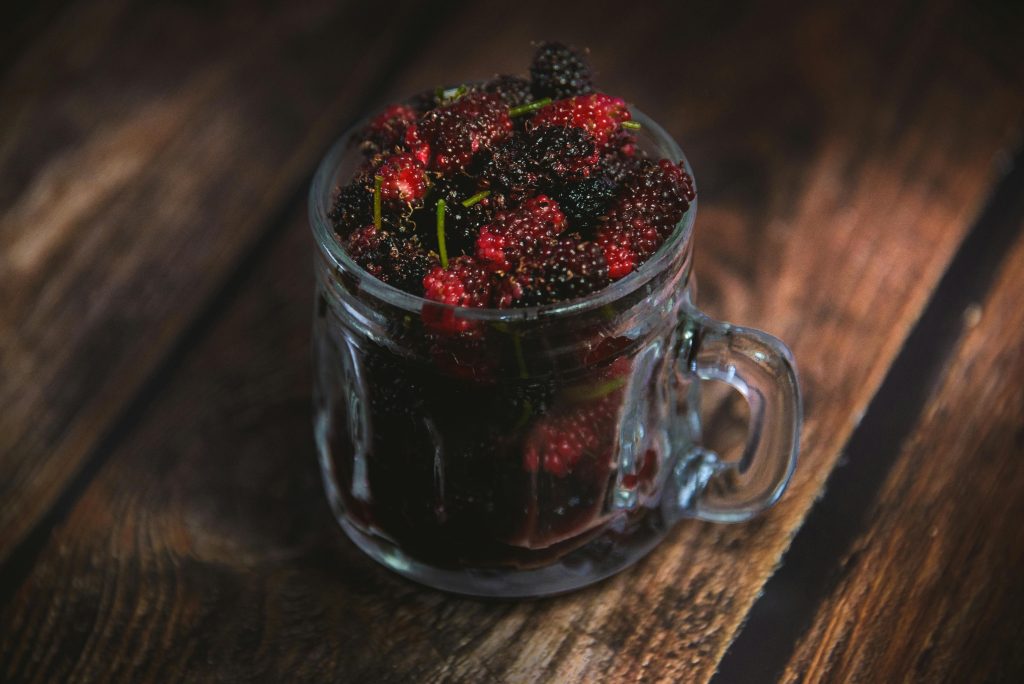
4. Berry Wines: Raspberries, Blackberries, and Blueberries—Oh My!
Berries make for some of the most exciting fruit wines out there. Raspberry wine is a delightful blend of sweet and tart, offering bright berry flavors with a hint of acidity. It’s often light, perfect for summer, and pairs excellently with cheesecake or a creamy dessert.
Blackberry wine, on the other hand, tends to be bolder and richer. It’s jammy, packed with dark fruit flavors, and sometimes slightly tannic, making it a fun alternative to traditional red wines. And blueberry wine? Imagine a walk through a sun-kissed blueberry field—that’s what it tastes like. It’s often slightly sweet with a smooth finish, perfect for relaxing after a long day.
The Oddballs: Exotic and Unusual Fruit Wines
Let’s get exotic. While apple, berry, and plum wines are well-known, there are other, more unusual fruit wines out there that deserve a mention.
1. Banana Wine: Tropical Sweetness
Yes, you read that right. Bananas can be turned into wine! Banana wine is particularly popular in parts of Africa and the Caribbean, where bananas grow in abundance. It’s typically sweet, with a rich, fruity flavor and tropical notes. While it might sound strange, banana wine can be surprisingly refreshing, especially when served chilled.
2. Pineapple Wine: A Taste of the Tropics
Pineapple wine is another tropical delight. It’s made by fermenting the naturally sweet and tart juice of pineapples. Popular in places like Hawaii and the Philippines, this wine often has a bright, tangy flavor with a slight fizz. It’s a fantastic choice for those who love their wines a bit on the sweet side and pairs perfectly with seafood or a light salad.
3. Dandelion Wine: The Floral Underdog
Technically, dandelion wine isn’t made from fruit but rather from the bright yellow petals of dandelions. It’s an old-fashioned wine, made by fermenting dandelion flowers with sugar, water, and sometimes citrus fruits. The result? A light, floral, and slightly herbal wine that’s often enjoyed as a springtime treat. Dandelion wine is part of many folk traditions and has been celebrated in literature as well.
How Do Non-Grape Fruit Wines Compare to Traditional Grape Wine?
If you’re wondering how wine from fruits stack up against their grape counterparts, the answer lies in personal preference. Non-grape wines tend to be sweeter or fruitier and often have a lower alcohol content. That’s because many fruits naturally have less sugar than grapes, which can affect both the alcohol levels and the overall body of the wine.
However, just like grape wine, non-grape fruit wines can range from sweet to dry and light to full-bodied. They also share the same versatility in terms of food pairings. A crisp apple wine can be a great substitute for a Sauvignon Blanc with a light seafood dish, while a rich blackberry wine can stand up to hearty meals like a bold red wine would.
Making Your Own Fruit Wine
Feeling adventurous? You can actually make your own fruit wine at home! The process is similar to making grape wine, but instead of grapes, you’re using your fruit of choice. Here’s a basic rundown:
Pick Your Fruit: Whether it’s apples, cherries, berries, or even bananas, start with ripe, high-quality fruit.
Add Sugar and Yeast: Since many fruits don’t have as much sugar as grapes, you’ll likely need to add sugar to your mixture. Then, introduce yeast to kickstart the fermentation.
Let It Ferment: Fermentation can take anywhere from a few weeks to a few months, depending on the fruit and desired alcohol content.
Rack It and Wait: Once the initial fermentation is done, transfer (or “rack”) the wine into a clean container to remove any sediment. Then, let it age and develop flavor over time.
Final Thoughts
The world of fruit wine is vast, diverse, and full of surprises. Whether you’re sipping a crisp apple wine on a sunny day or enjoying a glass of rich cherry wine by the fire, non-grape fruit wines offer an exciting alternative to traditional wines. So, next time you’re feeling adventurous, grab a bottle of blackberry wine, pineapple wine, or even banana wine—you might just discover your new favorite drink!
Imagine stepping into your home and feeling like you’ve just arrived at a peaceful vineyard. The air smells like fresh grapes and the earthy soil that nourishes them. Sunlight streams through windows designed to bring in that soft, golden glow that you only seem to find in wine country. This is the dream for many wine lovers — to live surrounded by the charm and tranquility of a vineyard, without necessarily moving into one.
Designing a wine-themed home is more than just throwing in a few grape motifs and bottles as décor. It’s about creating a space that echoes the simplicity, elegance, and natural beauty of a vineyard. Whether you’re planning to plant a few grapevines in the backyard or you want the entire home to reflect your passion for wine, this guide will help you build your dream vineyard-inspired family home.
1. Architectural Style: Bringing Wine Country to Your Doorstep
The architecture of a wine-themed home is what sets the stage for everything else. Picture the rolling hills of Tuscany, the rustic charm of Provence, or even the minimalist beauty of California’s Napa Valley. The key here is to choose an architectural style that reflects the region or vineyard that speaks to you the most.
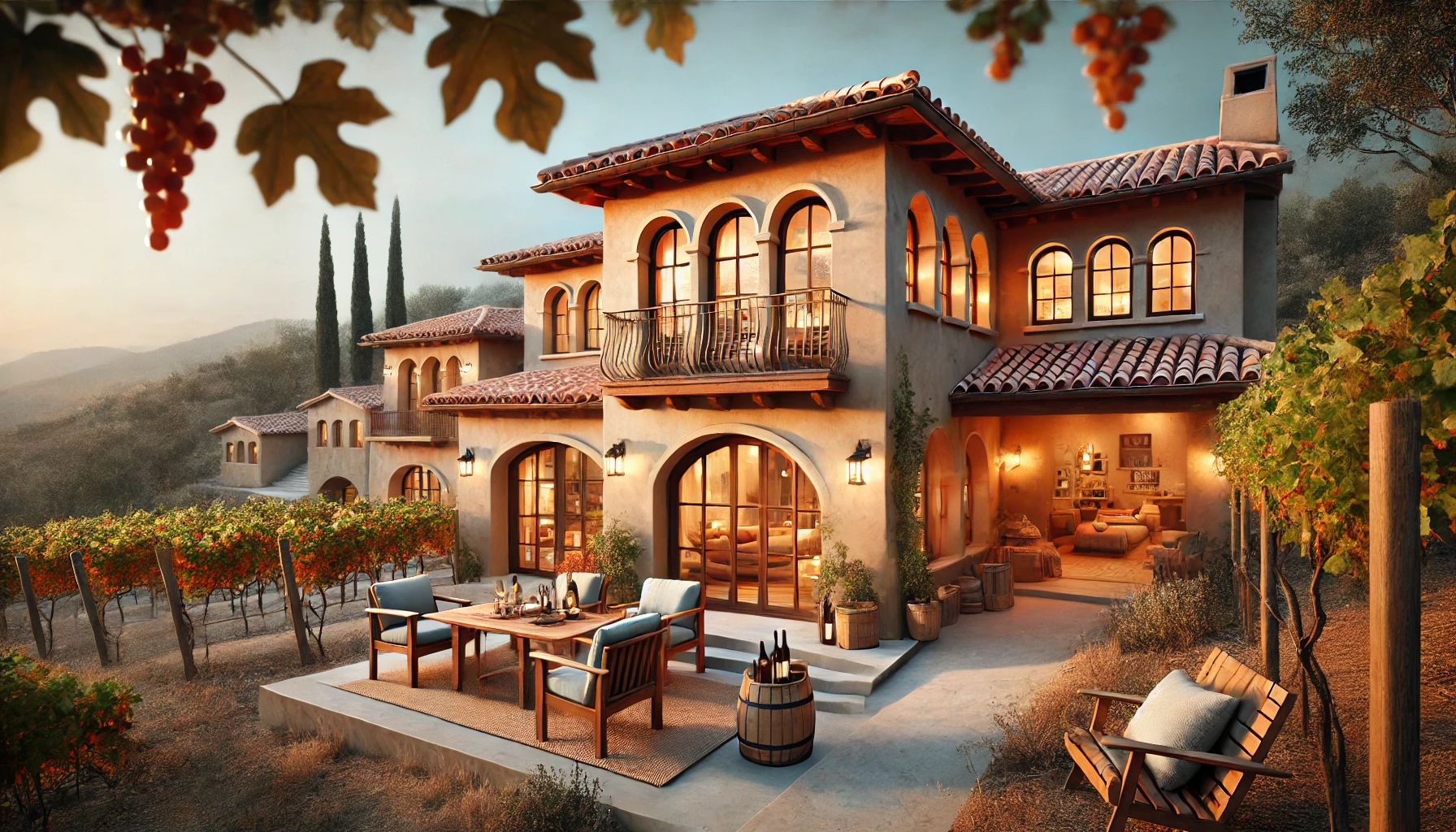
For a Mediterranean vineyard vibe, think about homes with terracotta roofs, stucco walls, and arched windows. The style is warm, inviting, and full of character. Add wrought iron balconies and shutters for a touch of that old-world charm. The idea is to make the house blend into its natural surroundings, as if it grew out of the earth alongside the grapevines.
If you’re drawn to the laid-back elegance of Napa Valley, a more modern, farmhouse style could be the way to go. This look often features clean lines, big windows to bring in natural light, and a lot of reclaimed wood. You might see exposed beams, high ceilings, and open spaces that connect the indoors with the outdoors. Wine is all about nature, after all, so letting the landscape become part of your home is a beautiful way to live your passion.
Don’t forget the cellar! A wine cellar, whether big or small, is essential for a wine-inspired home. You can go traditional with stone walls and dim lighting, or modern with glass walls and climate-controlled perfection.
2. Vineyard Essentials: How Much Land Do You Need?
A vineyard-Inspired home wouldn’t be complete without a few grapevines, or even a small-scale vineyard right on your property. But how much land do you need to grow your own grapes? Well, it depends on your ambitions.
If you’re thinking of growing just enough vines to make a few bottles of your personal blend, you might not need more than a small plot in your garden. A single vine can take up around 25 square feet, so even a modest garden can handle a few vines. You could create a cozy little vineyard corner, complete with a seating area where you can relax with a glass of wine and admire the fruits of your labor (literally!).
But if you’re dreaming big and want to go for a more authentic vineyard experience, you’ll need at least half an acre. On average, one acre of vineyard land can produce between 400 to 600 bottles of wine per year. Imagine gifting your homemade wine to family and friends or even selling it locally.
Consider the land’s slope and soil quality too. Vines prefer well-drained soil and sunlight. A slight hill is ideal because it allows water to drain properly, and it exposes the vines to more sunlight throughout the day. Your backyard doesn’t need to be Napa Valley, but a sunny, open space with a slight incline can work wonders.
3. Choosing the Right Grape Vines: What to Plant and Where
Once you’ve figured out how much land you’re working with, it’s time for the fun part: choosing your grapevines. This might seem like a simple task, but it’s a bit like choosing the right dog breed — every vine has its own personality, and not all are suited for every climate or soil.
If you live in a warmer climate, like Southern California or parts of Australia, you can go for sun-loving grape varieties like Cabernet Sauvignon, Syrah, or Grenache. These grapes thrive in hot, dry conditions and can produce bold, flavorful wines. For a white wine option, Chardonnay is a great all-rounder that does well in many different climates, but it especially loves warmth.
If you’re in a cooler region, think about planting Pinot Noir or Riesling. Pinot Noir is a bit of a diva when it comes to climate — it loves cool, moderate temperatures, and it’s notoriously difficult to grow. But when done right, the results are divine. Riesling, on the other hand, is a bit more forgiving and can produce beautiful wines even in chillier, more unpredictable weather.
When selecting your grapevines, also consider how much space you have. Some grapevines need to sprawl, while others can be trained to grow upward on a trellis. Compact vines like Pinot Meunier or Muscat Blanc are good for smaller spaces, while sprawling varieties like Zinfandel will need more room to stretch out.
4. Creating a Wine-Inspired Interior: Rustic Elegance Meets Modern Comfort
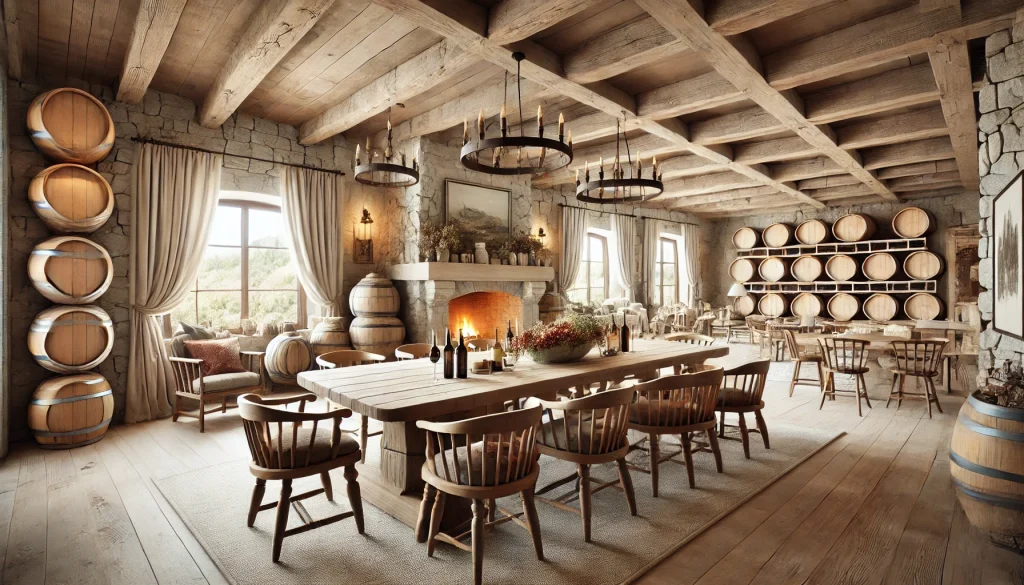
The exterior of your home may be vineyard-chic, but don’t forget about the interior! You want the inside of your home to be just as wine-inspired as the outside. Start with the basics: wood, stone, and natural textures. Think rustic wooden beams, stone fireplaces, and floors that feel like they’ve been walked on for centuries.
A wine-inspired home should feel warm and cozy, but with a touch of elegance. Soft, neutral colors like cream, beige, and warm gray make a great base, while deeper shades like burgundy, olive green, and gold can be used as accents. For a more modern twist, go for crisp whites and add splashes of rich, wine-red hues through your décor.
Wine barrels make excellent furniture. Repurpose an old barrel into a coffee table, or cut one in half to create unique shelving units. Wine crates can also be transformed into storage solutions, adding both charm and functionality to your space.
For lighting, think soft and ambient. Chandeliers made from wrought iron or reclaimed wood can bring a touch of rustic elegance, while glass pendant lights add a more modern feel. If you want to go all out, install a wine bottle chandelier or wine cork light fixture — both are perfect for the true wine enthusiast.
And don’t forget about the dining room! This is where your wine-inspired home really comes to life. Invest in a large, communal dining table, perfect for hosting long, wine-filled dinners with friends and family. A simple, farmhouse-style table works well, and you can pair it with mismatched chairs for a more relaxed, vineyard feel.
5. The Outdoor Experience: Extend Your Vineyard Home Outside
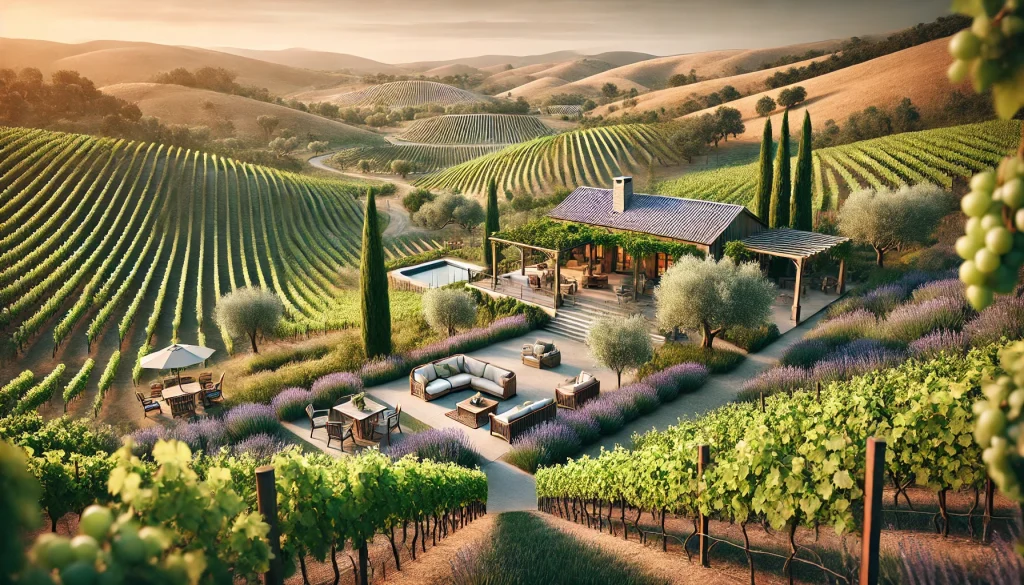
Your wine-inspired home wouldn’t be complete without an outdoor space that feels like you’re dining al fresco at a vineyard. A large, open deck or patio, surrounded by grapevines, is ideal for creating a space where you can enjoy wine with friends and family while soaking up the sunshine.
Consider adding a pergola draped with vines for a shaded dining area. Install outdoor seating with comfortable cushions in natural fabrics, and bring in elements like a fire pit, string lights, and lanterns to create a cozy atmosphere for evening gatherings.
You could even take it a step further by creating your own small vineyard-inspired garden. Plant herbs like lavender, rosemary, and thyme, which are often found around vineyards, and add potted olive trees or citrus plants for a Mediterranean touch.
If you’re feeling ambitious, you can build an outdoor kitchen, complete with a wood-fired oven for pizza and a grill for BBQs. Nothing says “vineyard living” like cooking and eating outside while sipping your favorite wine.
Final Thoughts: A Lifestyle Rooted in Wine Culture
Designing a vineyard-Inspired home is about more than just the décor — it’s about creating a lifestyle that celebrates the joy, relaxation, and beauty of wine culture. From choosing the right architectural style to planting grapevines in your backyard, every detail can bring you closer to living the vineyard life, even if you’re far from one.
With careful planning and a lot of passion, you can create a vineyard-inspired family home that not only looks stunning but also offers a tranquil, wine-centric escape from the hustle and bustle of everyday life.